
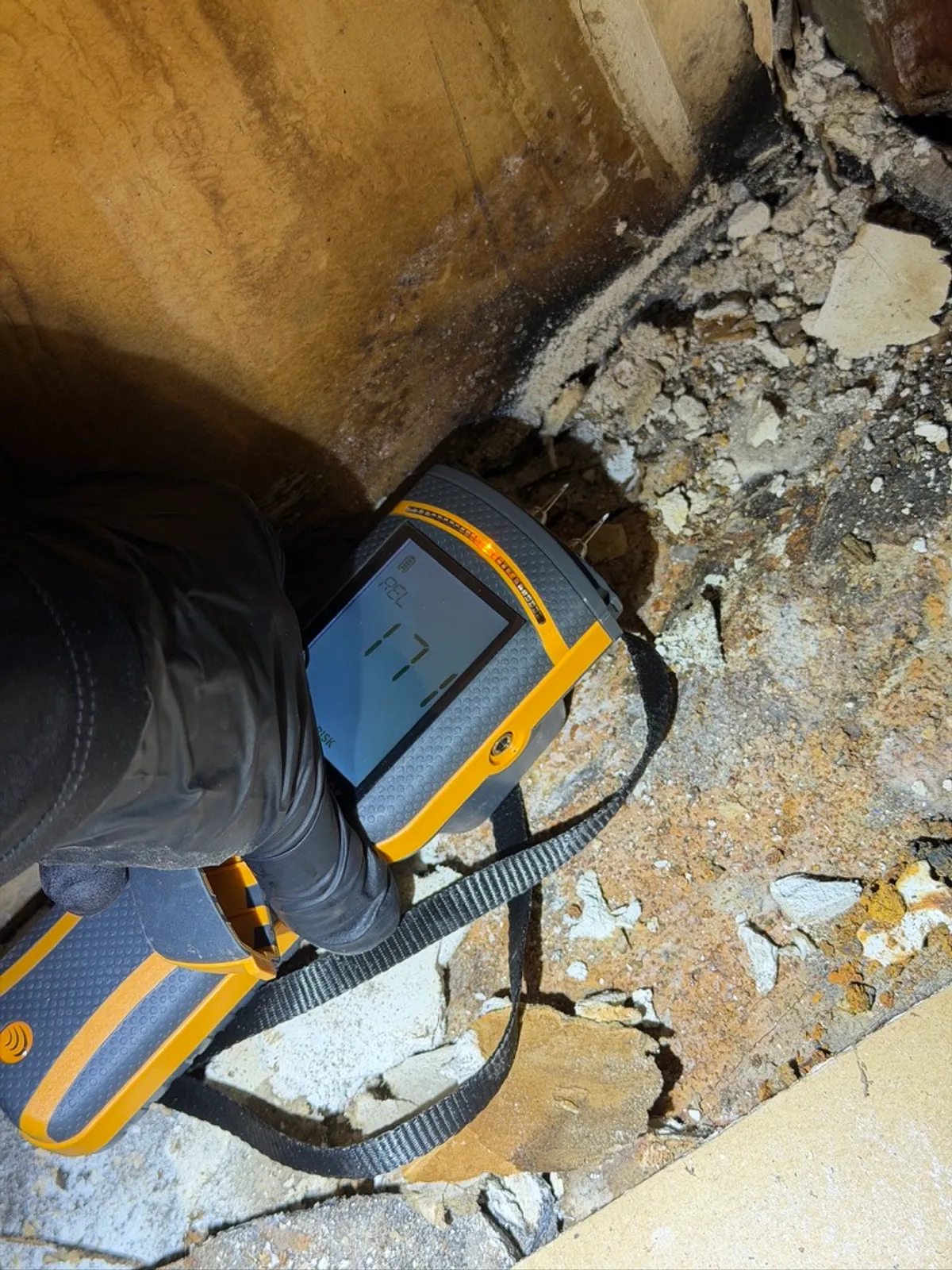
You moved a box, pulled back a piece of carpet, or noticed a musty smell that would not go away, and now you are looking at mold on your basement wall. The first instinct is to grab a spray bottle or call someone to rip it out. Before you do either, take a breath. What you do in the next few days decides whether you fix the problem once or pay for it twice.
This guide walks through what to do, what not to do, and why getting the basement inspected first usually saves money and stress.
Step 1: Do not disturb it
Scrubbing, spraying bleach, or tearing out drywall before anyone has looked at the area can release spores into the air and spread contamination to the rest of the house through your HVAC system. It also destroys the evidence an inspector needs to understand how far the growth goes.
- Keep people and pets out of the immediate area if you can
- If there is active water, stop the source if it is safe to do so
- Take clear photos of what you see, including any staining or water lines
- Avoid running fans that blow air across the affected area
Found mold in your basement?
Get it inspected before you pay anyone to remove it. Or snap a photo for a free AI analysis first.
Step 2: Understand that what you see is rarely the whole story
Basement mold usually starts where moisture collects: behind finished drywall, under carpet pad, along the bottom plate of framed walls, on the back side of paneling, and around ductwork. The spot you noticed is often the part that finally became visible, not where the problem began.
A professional inspection looks past the visible spot. In a typical basement inspection we:
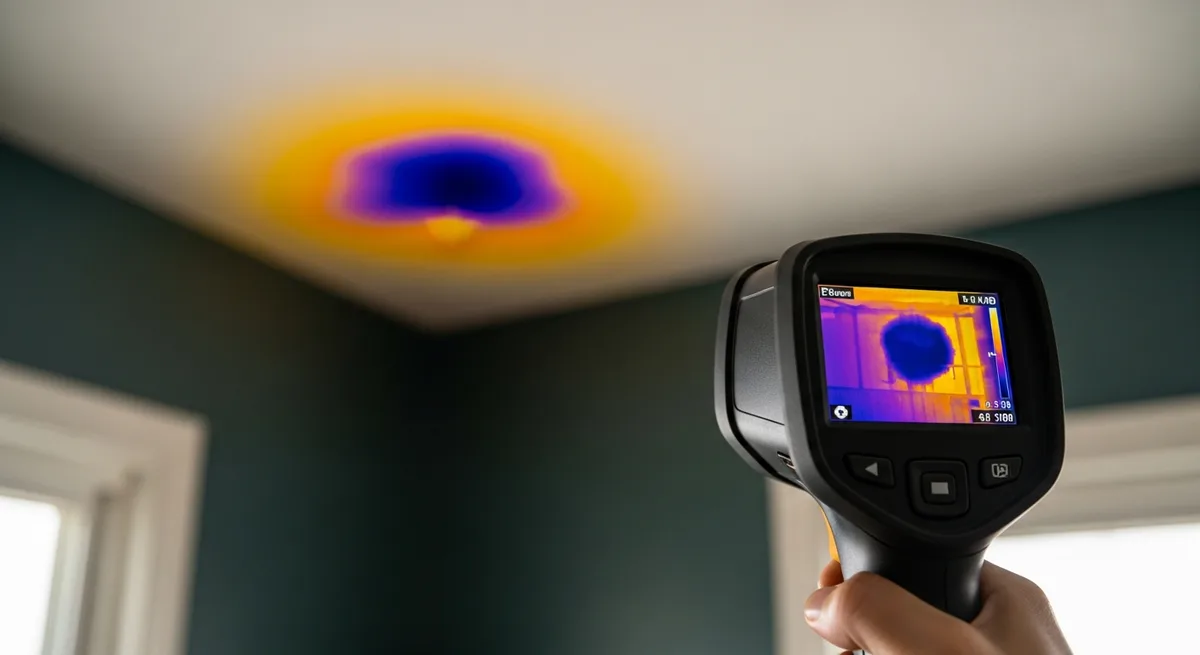
- Use FLIR thermal imaging to find cold, damp areas behind walls without cutting into them
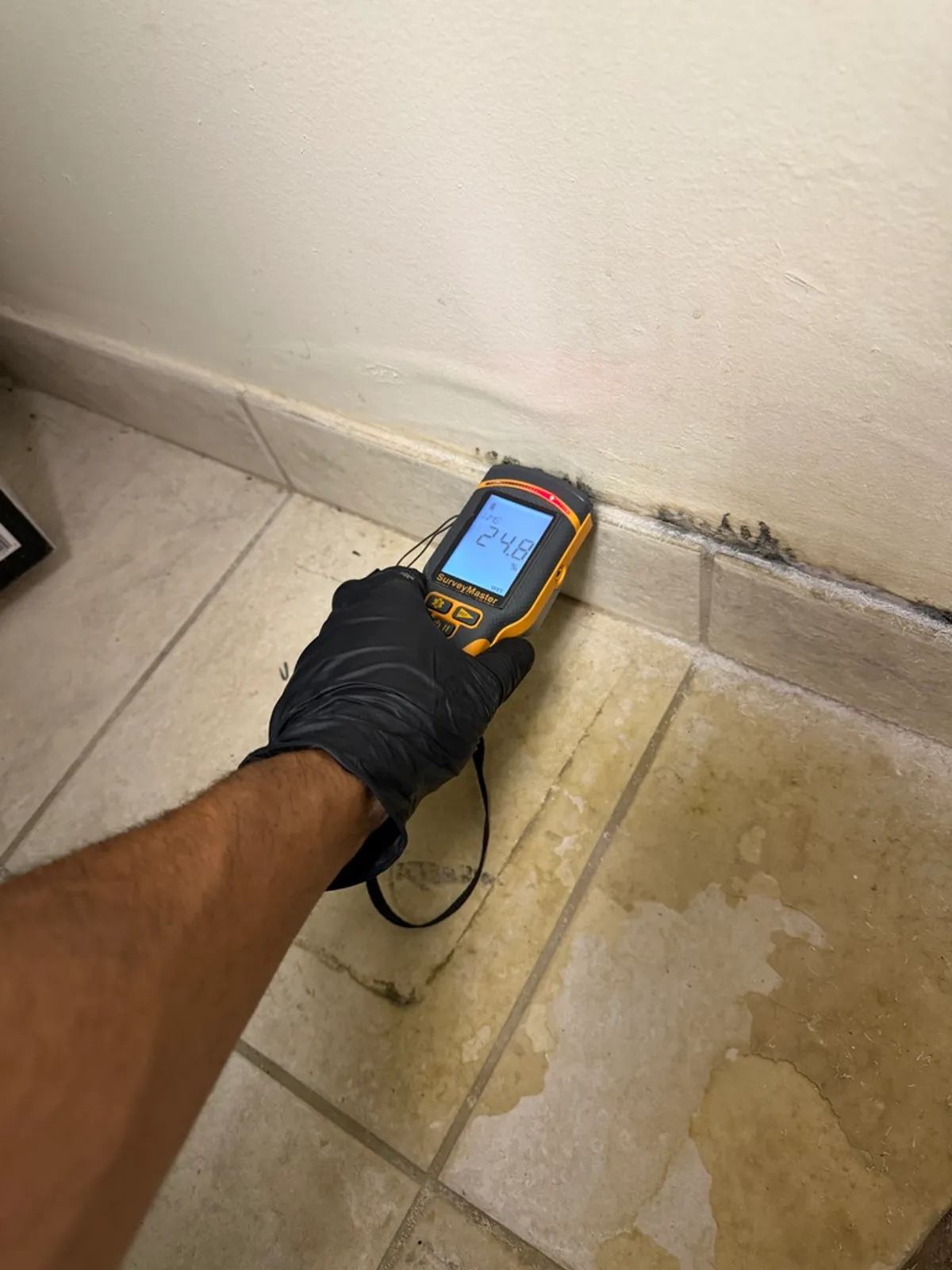
- Take calibrated moisture meter readings along walls, framing, and floors
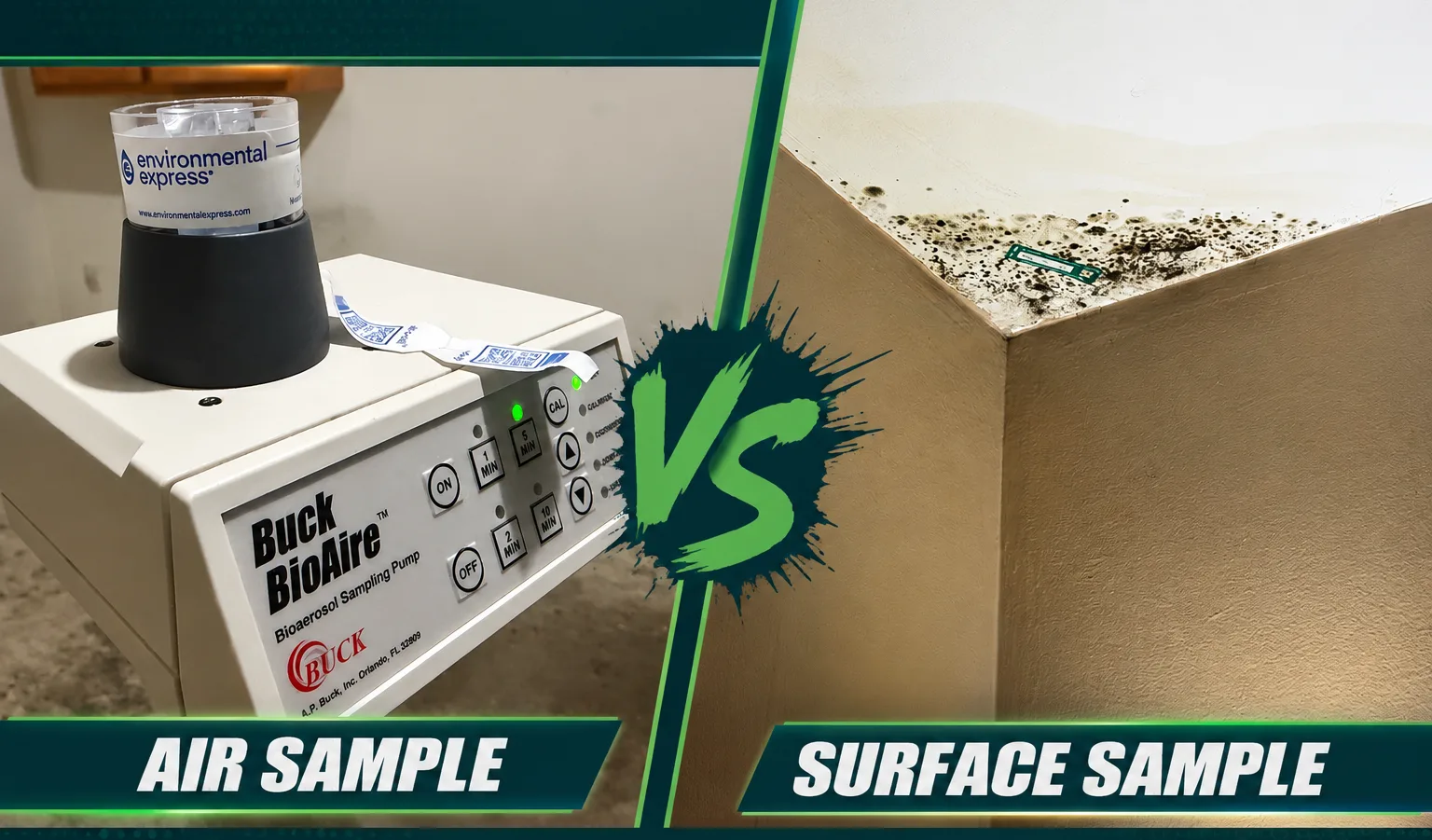
- Collect air samples indoors and an outdoor control to see whether indoor spore levels are elevated
- Take surface samples where growth is visible so the lab can identify what it is
- Look for the moisture source: seepage, condensation, plumbing, grading, or humidity
Samples go to a certified third-party AIHA/NVLAP-accredited lab, and you receive a written report with photos and a plain-English explanation of the findings.
Step 3: Get an inspection before you get removal quotes
This is the step most homeowners skip, and it is the one that matters most. If you call a removal company first, the company that profits from the job is also the one deciding how big the job is. That does not mean every contractor is dishonest. It means you have no independent way to check.
When you have an inspection report and a written remediation protocol in hand, you can:
- Get multiple bids against the same defined scope, so quotes are actually comparable
- Avoid paying for work that is not needed, or missing work that is
- Hand insurance adjusters and contractors objective documentation
- Know exactly what "done" should look like before work starts
Spore Shield only inspects and tests. We do not perform remediation, so we have nothing to gain from finding a bigger problem than you have.
Step 4: Fix the moisture, not just the mold
Mold that is cleaned without fixing the moisture source tends to come back. In Metro Detroit basements, the usual drivers are foundation seepage after heavy rain or snowmelt, condensation on cold concrete and ductwork during humid summers, finished walls built tight against concrete, and plumbing leaks. The EPA recommends keeping indoor relative humidity between 30 and 50 percent. A dehumidifier helps, but it will not overcome water coming through the foundation.
Step 5: Verify the work with clearance testing
After remediation, independent post-remediation clearance testing confirms the area has returned to normal levels before walls are closed up. It is the only objective way to know the job was completed, and it gives you documentation if you sell the home later.
When to call for an inspection
- Visible growth on walls, framing, carpet, or stored items
- A musty smell that does not go away
- Any basement flooding, sewer backup, or recent water event
- Mold that has come back after cleaning
- Unexplained allergy-like symptoms that improve when you leave the house
- Buying or selling a home with a finished basement
We inspect basements across Oakland, Macomb, and Wayne counties, including Troy, West Bloomfield, Royal Oak, and Berkley. Learn more about our mold inspection and testing service or book an inspection online.
Frequently asked questions
What should I do first if I find mold in my basement?
Should I call a mold removal company or a mold inspector first?
Is basement mold always black mold?
Can I clean small spots of basement mold myself?
Why does mold keep coming back in my basement?
How do I know the mold is gone after it is removed?
Test Your Home
Today!
Trusted by Michigan families, Spore Shield delivers fast, accurate mold testing. Pick a time online in minutes.
Book Your Inspection