
Air Samples vs. Surface Samples: Which Mold Test Do You Actually Need?
If you have ever looked up mold testing, you have run into two terms that sound like they should mean the same thing: air sampling and surface sampling. Most people assume one is just the cheaper version of the other, or that a good inspector picks whichever they prefer.
That is not how it works. These two tests answer completely different questions. Choosing the wrong one is the single most common reason people end up with a lab report that technically has data on it and still tells them nothing useful about their house. Here is the plain-English breakdown.
The Short Version
If you only remember one thing: air sampling is about air quality and exposure. Surface sampling is about materials and structures.
Not sure if what you're seeing is mold?
Snap a photo and get a free AI analysis in about 60 seconds — no appointment needed.
Air Sampling: Measuring What You Actually Breathe
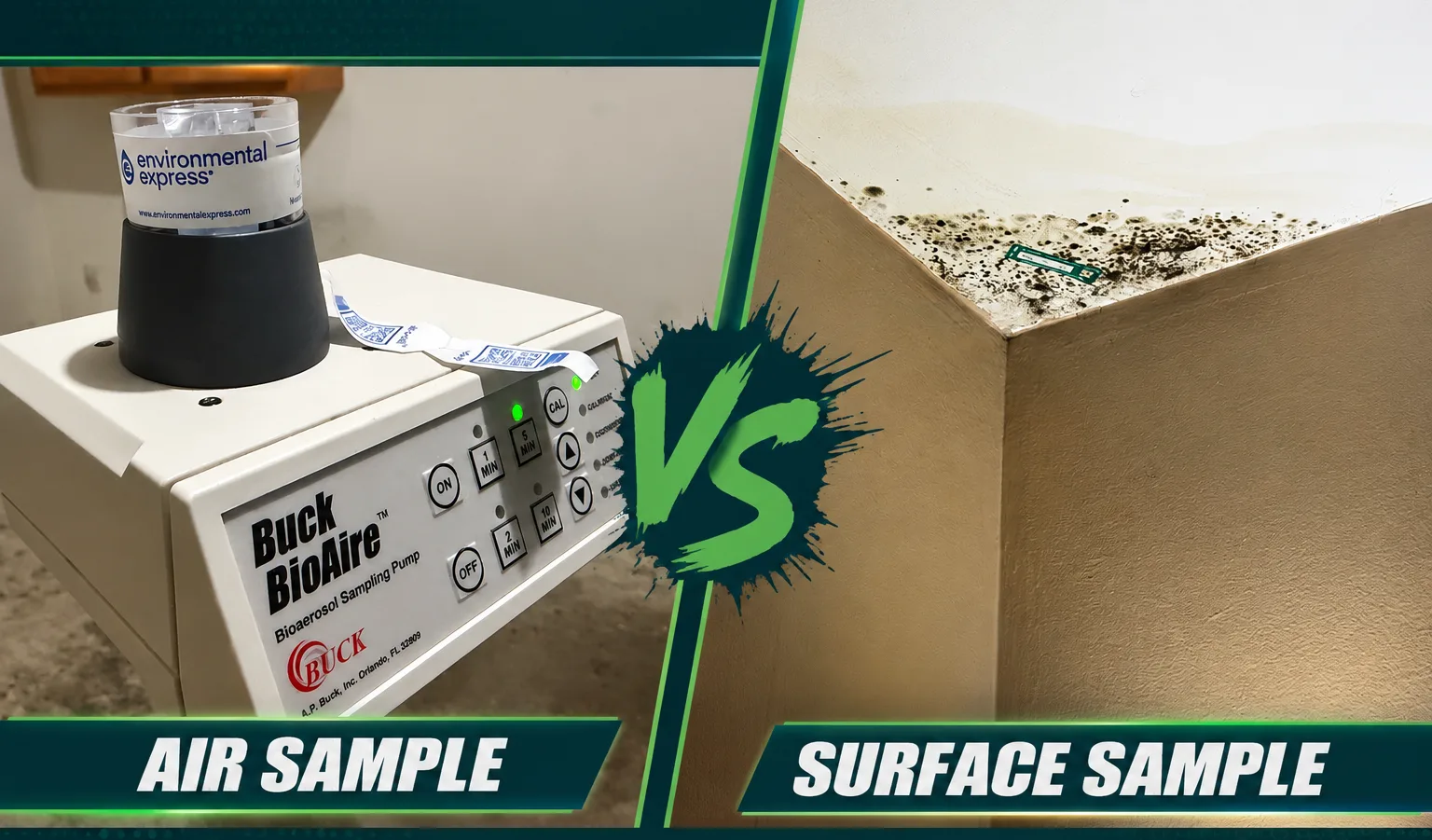
An air sample is taken with a calibrated air pump (we use a Buck BioAire) that pulls a known volume of air through a spore trap cassette for a set period of time. Because the volume is known, the lab can convert what it sees into a real number: spores per cubic meter of air.
That number is the entire point. Mold exposure is not about whether mold exists in your home. Mold spores exist everywhere. They are outdoors right now, they came in on your shoes, and they are in every building in Michigan. The question is whether your indoor air has an abnormal spore load, and abnormal only means something compared to a baseline.
That is why every legitimate air test includes an outdoor control sample. Indoor air is compared against the outdoor air on that same day, at that same property. The relationship between the two, often called the indoor-to-outdoor ratio, is what tells an inspector whether your air is behaving normally or whether something inside the building is generating spores.
An indoor count of, say, 2,000 spores per cubic meter is meaningless on its own. Against an outdoor control of 8,000 on a humid August afternoon, it is normal. Against an outdoor control of 200 in February, it is a serious finding. Anyone who hands you an indoor air result with no outdoor comparison has handed you a number without a ruler.
Air sampling is also the only method that can catch growth you cannot see. Mold behind drywall, under carpet padding, inside a wall cavity, or in a return duct still releases spores into the living space. A tape lift on a wall that looks clean will come back clean. The air will not.
Choose air sampling when:
- There is no visible mold, but there is odor, a history of water intrusion, or occupants who feel better when they leave the house.
- You suspect hidden growth behind walls, under flooring, in the HVAC system, or in a crawl space.
- You are buying or selling a home and need a defensible, documented result.
- Someone in the home has asthma, allergies, or is immunocompromised, and you need to understand actual exposure.
- Remediation has been completed and you need clearance testing to confirm the air has returned to normal.
Air testing is the backbone of our indoor air quality testing service, and it is the method that best answers the health and exposure questions covered in our guide to the health risks of black mold exposure.
Surface Sampling: Identifying What Is on the Material
Surface sampling is for the thing you can see. The black speckling around the bathroom window. The gray fuzz on the joist. The staining on the back of the baseboard you pulled off. A surface sample does not measure air. It answers a narrower, more concrete question: what is this?
That matters more than people expect, because a lot of what homeowners identify as mold is not mold. Soot from a candle or furnace, mineral efflorescence bleeding through masonry, wood tannin staining, dust adhered to a cold surface, and old water marks all get called mold every week. A surface sample settles it, and it settles it cheaply.
When the material is colonized, the surface sample tells you which organisms are present. That is not trivia. A wall growing Cladosporium and a wall growing Stachybotrys or Chaetomium are telling you very different stories about how long that material has been wet and how it should be handled. Those water damage indicator species do not show up because of a humid summer. They show up because something has been wet for a long time.
There is one more thing a surface sample can do that air sampling simply cannot: it can show growth structures, not just spores. Under the microscope, an analyst can see hyphae, conidiophores, and fruiting bodies still attached and intact. Loose spores lying on a surface just mean spores landed there, which happens everywhere. Intact growth structures mean the mold is actively colonizing that material. That is the difference between “dust settled here” and “this material is a source and needs to come out.”
Choose surface sampling when:
- There is visible discoloration or growth and you need to know what it is.
- You need to confirm mold versus soot, staining, or efflorescence before spending money on remediation.
- You are documenting a finding for an insurance claim, a landlord dispute, or a real estate negotiation.
- A remediation scope is being written and the contractor needs to know which materials are actually colonized.
- You want to know whether a high-concern water damage species is present.
Tape Lift vs. Swab: Two Ways to Take a Surface Sample
Both are surface samples. The choice between them comes down to the surface itself.
Tape lift uses a clear adhesive slide pressed onto the material and lifted straight off. It is the preferred method whenever the surface allows it, because it takes the sample in place. The growth structures stay oriented the way they grew, which gives the analyst the best possible look at whether the material is genuinely colonized or just dusty. Best for drywall, painted surfaces, wood framing, trim, tile, ductwork exteriors, hard flooring, and any flat, reasonably dry surface.
Swab uses a sterile swab drawn across the material and sealed in a transport tube. It reaches everywhere tape cannot: textured or porous surfaces, grout lines, rough masonry and concrete block, HVAC interiors, wet or slick surfaces where tape will not adhere, curved surfaces, and tight cavities. A swab is also the method to use if a viable culture is ever needed, since the collected material can be grown out rather than only examined visually.
The tradeoff: a swab scrambles the sample. You still get a clean identification of what is present, but you lose some of the structural context that a tape lift preserves. So the rule is simple. If tape will stick to it and give a clean lift, use tape. If it will not, use a swab.
About the Lab: The Analysis Is Similar, the Question Is Not
Here is something most companies will not tell you, and we would rather you hear it from us. At the lab, an air cassette and a tape lift are not analyzed in wildly different ways. In both cases the sample is mounted, stained, and read by a trained analyst under a microscope who identifies fungal structures by morphology. The tape essentially gets mounted onto the slide the same way the deposit from the air cassette does. The technique is not the differentiator.
What is being sampled is the differentiator. The air cassette holds a known volume of your indoor air. The tape lift holds a two-centimeter patch of one specific wall. Same microscope, same analyst, completely different meaning.
That is exactly why “which sample should I take” is an inspection question, not a lab question. The lab tells you what is in the sample you gave it. Deciding what to sample, where, how many, and against what control is the job of the person standing in the building with a moisture meter. Get that part wrong and no lab in the country can save the report.
The Honest Limitations of Both
We would rather set expectations correctly than sell you a test that overpromises.
- Air sampling is a snapshot. It captures what was airborne during the minutes the pump was running. Spore release is episodic; it spikes when air moves, when someone walks across a carpet, when the furnace kicks on. A single clean air sample does not prove there is no mold in the building. It proves that at that moment, in that room, the airborne spore load looked normal.
- Surface sampling only tells you about the spot you sampled. A negative tape lift on one wall says nothing about the wall behind it.
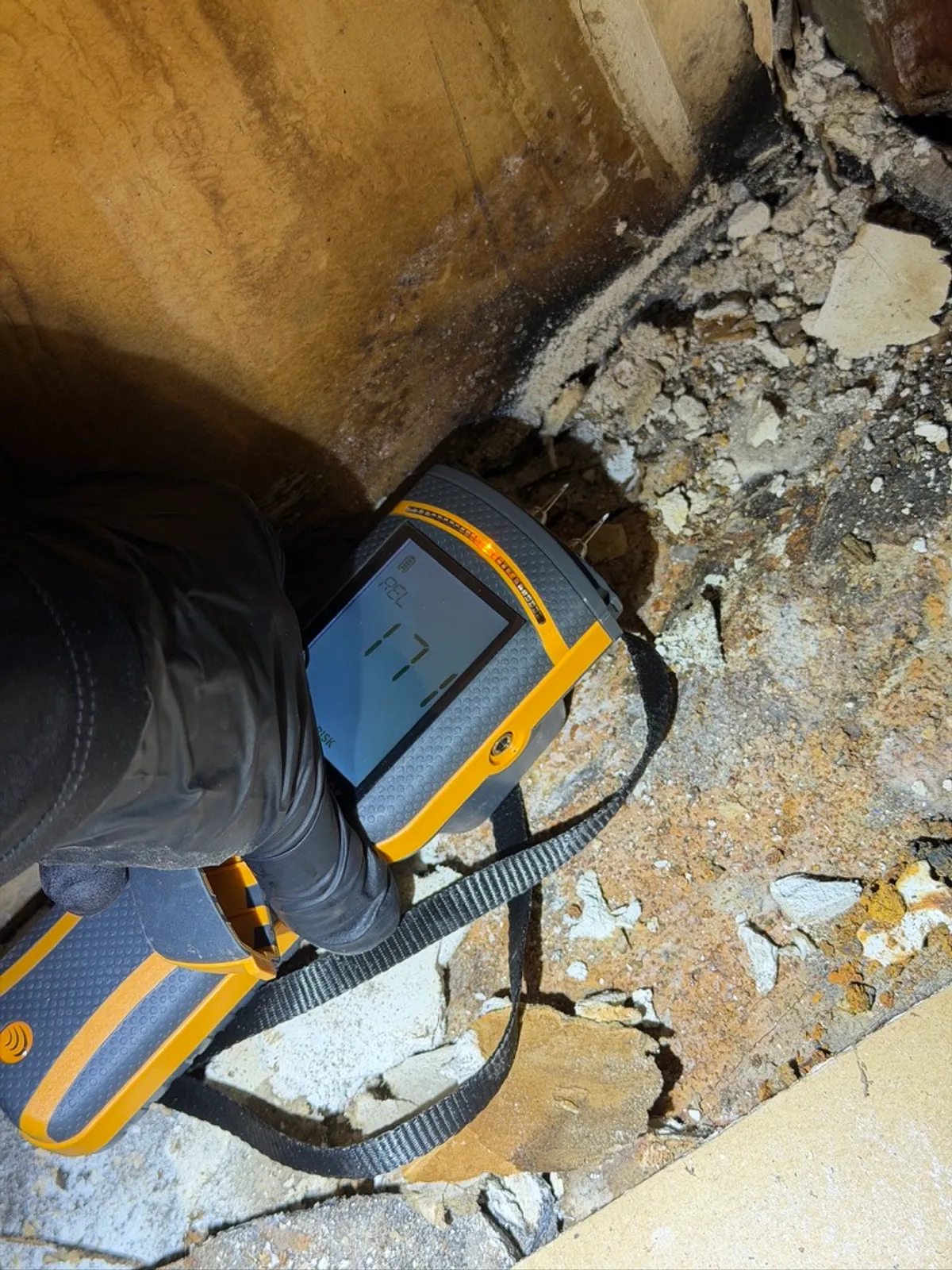
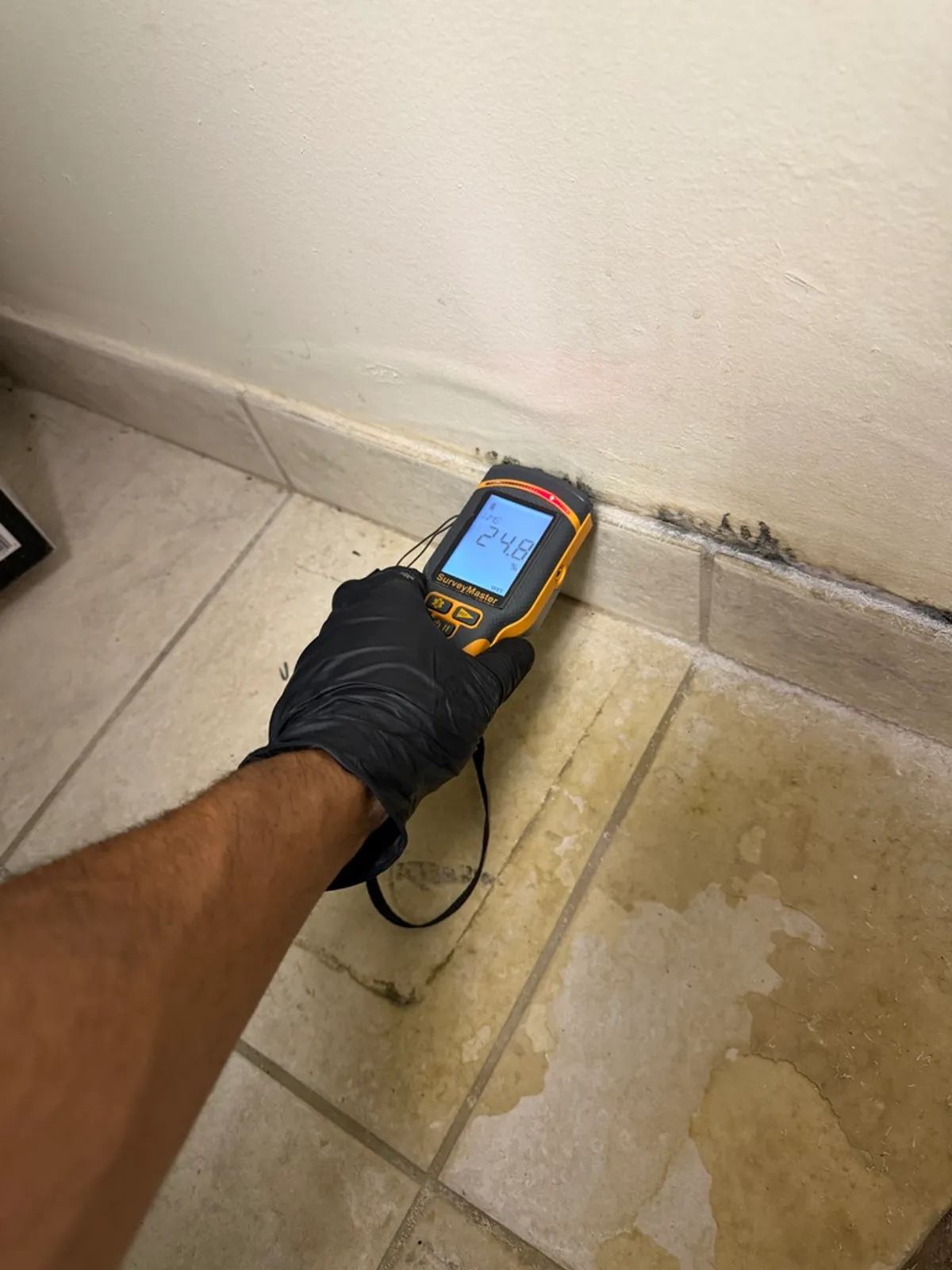
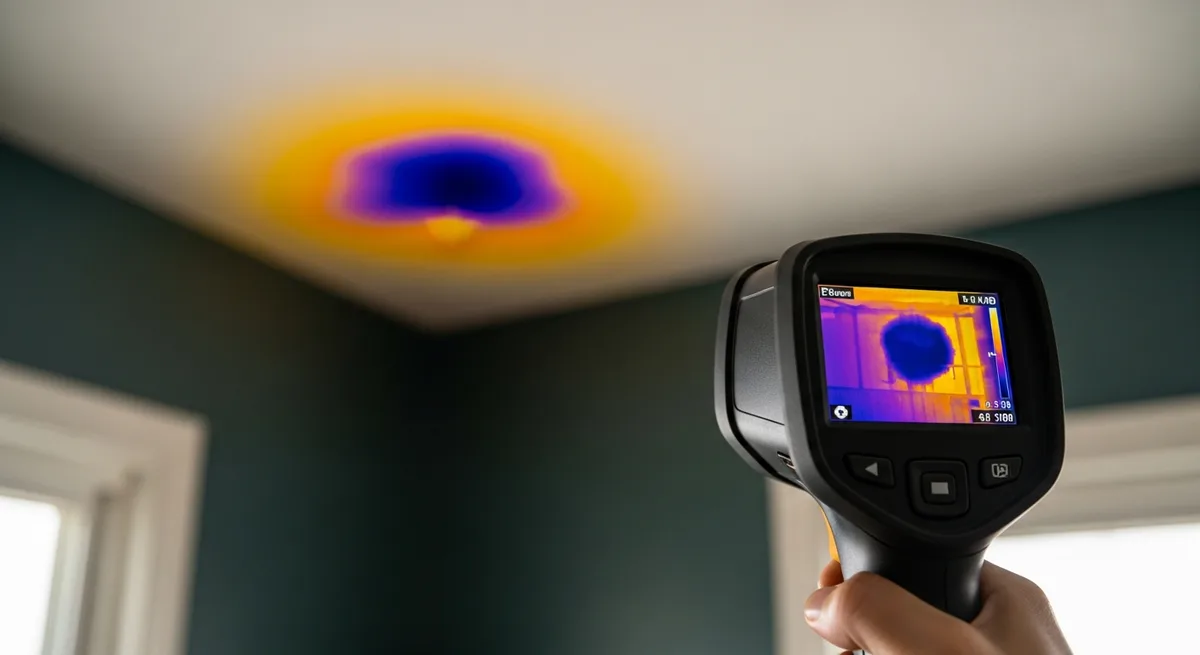
- Neither test finds the water. Sampling identifies fungal contamination. It does not identify why the material got wet. That comes from the visual inspection and the moisture work: moisture meters (we use Protimeter SurveyMaster and HygroMaster) and thermal imaging with a FLIR camera to locate moisture conditions behind surfaces.
Thermal imaging detects temperature differentials associated with moisture. It does not detect mold, and any company telling you their camera “sees mold” is selling you something. This is why sampling is never the whole inspection. It is the confirmation step at the end of a proper visual and moisture assessment.
So in Practice: Usually Both
For most real properties, the answer is not air or surface. It is air and surface, used for their respective jobs. A typical assessment looks like this:
- Full visual inspection and moisture mapping to find where water is or has been.
- An outdoor control air sample to establish the day's baseline.
- Indoor air samples in the affected areas and a representative living space, to quantify exposure and detect hidden sources.
- Tape lift or swab samples on any visible suspect growth, to identify it and confirm whether the material is colonized.
Air gives you the exposure picture and catches what you cannot see. Surface gives you hard identification of what you can see. Together they tell you what is happening, where it is, and what has to be removed.
If there is truly nothing visible anywhere and the concern is air quality alone, air-only sampling is a legitimate and cost-effective path. If there is one obvious patch of growth in an otherwise dry, healthy building and you simply need to know what it is, a surface sample alone may be all you need. Those cases exist. They are just less common than people hope. If you are still weighing whether you need any testing at all, our guide to the early signs of mold in your home is a good place to start.
How Spore Shield Handles It
Every sample we collect goes to a certified third-party AIHA and NVLAP-accredited laboratory, with standard results in 72 hours. Air samples are collected on a calibrated Buck BioAire pump with an outdoor control on every job. Surface samples are taken by tape lift or swab depending on what the surface calls for.
We test. We do not remediate. So when we tell you a material is colonized and needs to come out, or that it does not, we have no financial stake in the answer either way. The recommendation follows the data.
We serve Metro Detroit and Southeast Michigan, including West Bloomfield, Bloomfield Hills, Birmingham, Troy, and Royal Oak. Not sure which test you need? Call (248) 955-2269 and describe what you are seeing, and we will tell you straight.
Frequently Asked Questions
The questions homeowners ask most when deciding between air and surface mold testing.
Can I just do a surface test to save money?
Do I really need the outdoor air sample?
Is a DIY petri dish kit the same thing as an air test?
What is a “passing” air result?
Which test do I need for post-remediation clearance?
Does mold have to be visible for a test to find it?
Test Your Home
Today!
Trusted by Michigan families, Spore Shield delivers fast, accurate mold testing. Pick a time online in minutes.
Book Your Inspection