
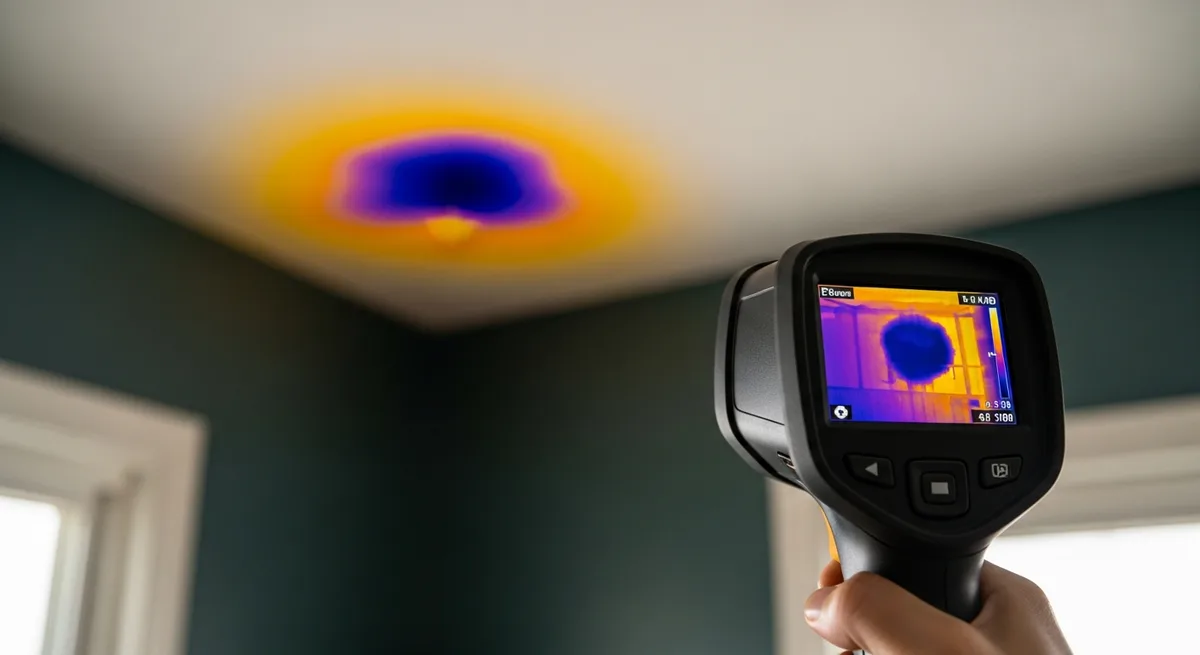
No. Thermal imaging cameras cannot detect mold. They measure surface temperature, not biological growth. What a thermal camera can find is moisture, and because mold cannot grow without moisture, thermal imaging is a fast and effective way to narrow down where a mold problem is likely to be. It is a search tool, not a test.
That distinction matters, and it is worth understanding before you hire anyone who shows up with an infrared camera.
What a thermal camera actually sees
Every surface emits infrared energy in proportion to its temperature. A thermal camera reads that energy across everything in its field of view and renders it as a color image, with a temperature scale displayed on screen.
It is not X-ray vision. The camera cannot see through drywall, tile, or plaster. It reads the surface, and only the surface.
What makes it useful is evaporation. When a building material holds moisture, that moisture evaporates, and evaporation pulls heat away from the surface. A wet section of drywall will read measurably colder than the dry drywall around it, even when the two look identical to your eye.
That temperature difference is the signal. It shows up as a cold patch, often with an irregular shape that follows the path water actually took rather than the framing or the seams.
Not sure if what you're seeing is mold?
Snap a photo and get a free AI analysis in about 60 seconds — no appointment needed.
Why this matters for mold
Mold requires moisture. Remove the water and growth stops. That single fact shapes how a competent mold inspection is sequenced.
The goal is not to find mold. The goal is to find the water, because the water tells you where growth is possible, where it is likely, and most importantly, why it happened. A visible patch of growth on a ceiling tells you a problem exists. The moisture source tells you whether cleaning it will actually solve anything.
The EPA notes that mold can begin growing on damp materials within 24 to 48 hours. In practice that means an active moisture source is a recurring problem, not a one-time event. Treating growth without correcting the source produces a home that looks clean and grows the same problem back.
Thermal imaging is how an inspector covers a lot of ground quickly in the search for that source. A full room scans in seconds. Hundreds of square feet narrow down to a few. Nothing gets opened, cut, or pulled up in the process.
What thermal imaging cannot do
This is the part that gets oversold, so here is the full list of limitations.
- It does not detect mold. No camera does. Anyone claiming their thermal camera finds mold is describing something the physics does not support.
- It only reads the surface. Moisture deep inside a wall cavity may never affect the surface temperature enough to register. A clean thermal scan is not the same as a dry wall.
- It needs a temperature difference. The camera works by contrast. When indoor and outdoor temperatures are close, or when a surface has been in direct sunlight, contrast flattens and moisture can go unseen. Time of day and season genuinely affect what a scan can show.
- Cold spots have many causes. Missing or settled insulation, an air leak around a window frame, a cold water supply line running behind drywall, and a thermal bridge at a stud all read cold. So does moisture. The image alone cannot tell you which one you are looking at.
- Reflective and glossy surfaces distort readings. Polished tile, glass, and metal reflect infrared and can produce readings that mean nothing.
That last group of limitations is why a thermal image is never a finding on its own. It is a lead.
How a thermal image becomes an actual finding
The camera narrows the search. Other tools close it.
- Scan. Thermal survey of ceilings, walls, and floors in the areas of concern, plus any area with a moisture history.
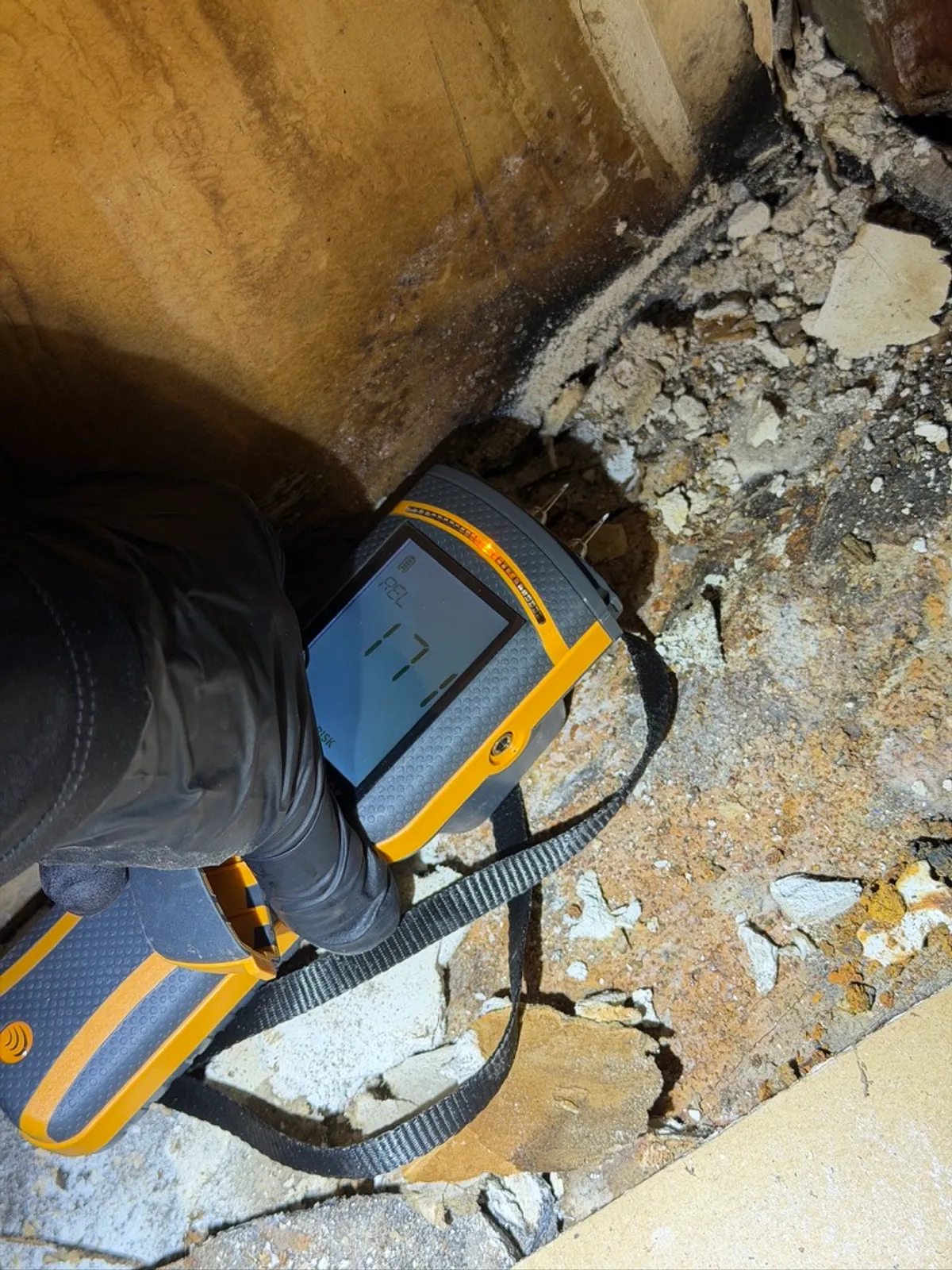
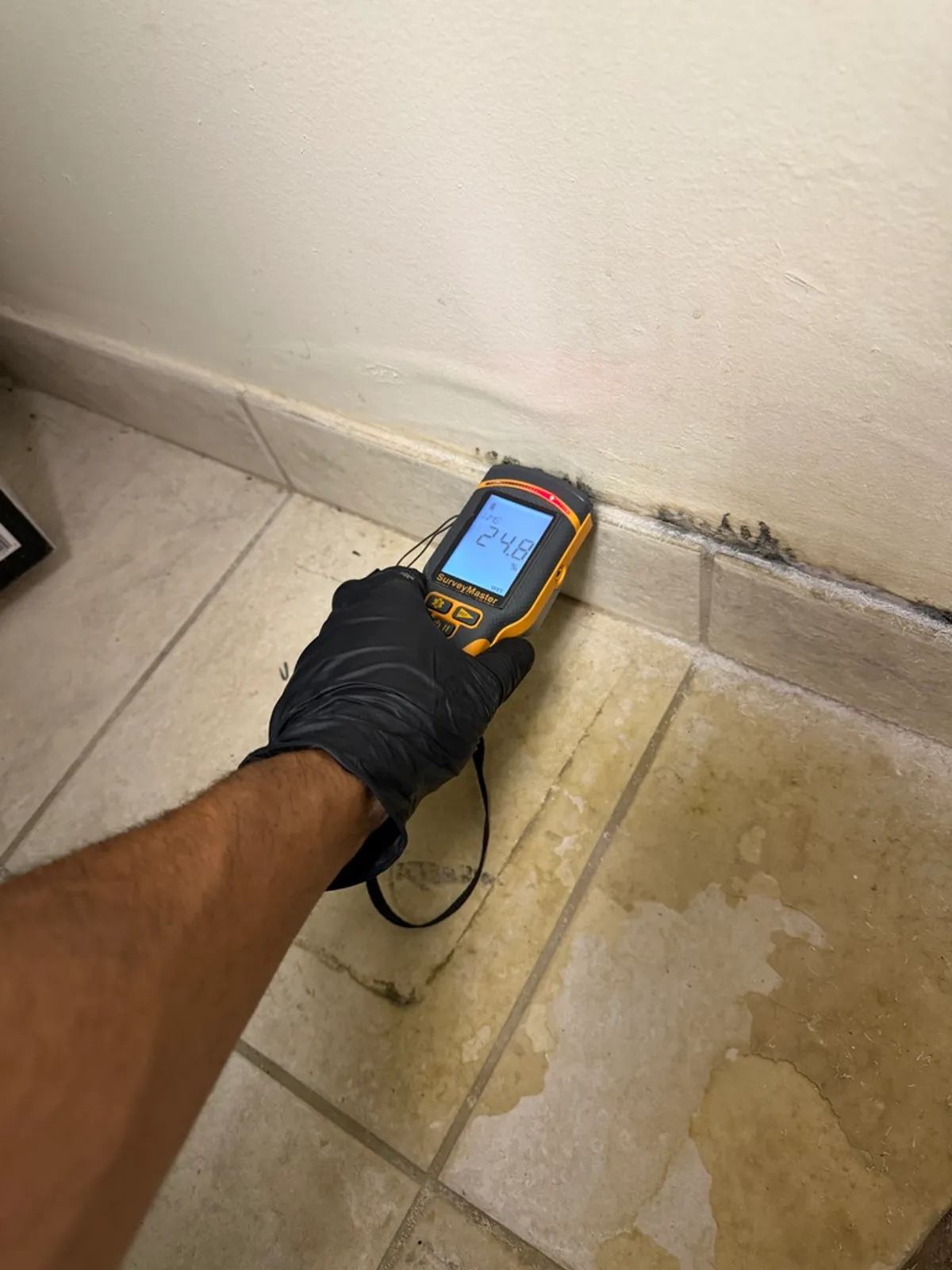
- Confirm. Every cold spot gets checked with a moisture meter. Pin meters read moisture content directly in a material. Pinless meters scan below the surface without leaving marks. If the meter does not confirm elevated moisture, the cold spot is something else and gets documented as such.
- Measure conditions. Relative humidity, temperature, and dew point readings establish whether the environment itself supports condensation and growth. Unchecked humidity from a bedroom humidifier is one of the most common ways those readings drift into the danger zone.
- Look inside if needed. A borescope can inspect a wall or ceiling cavity through a small access point rather than opening a section.
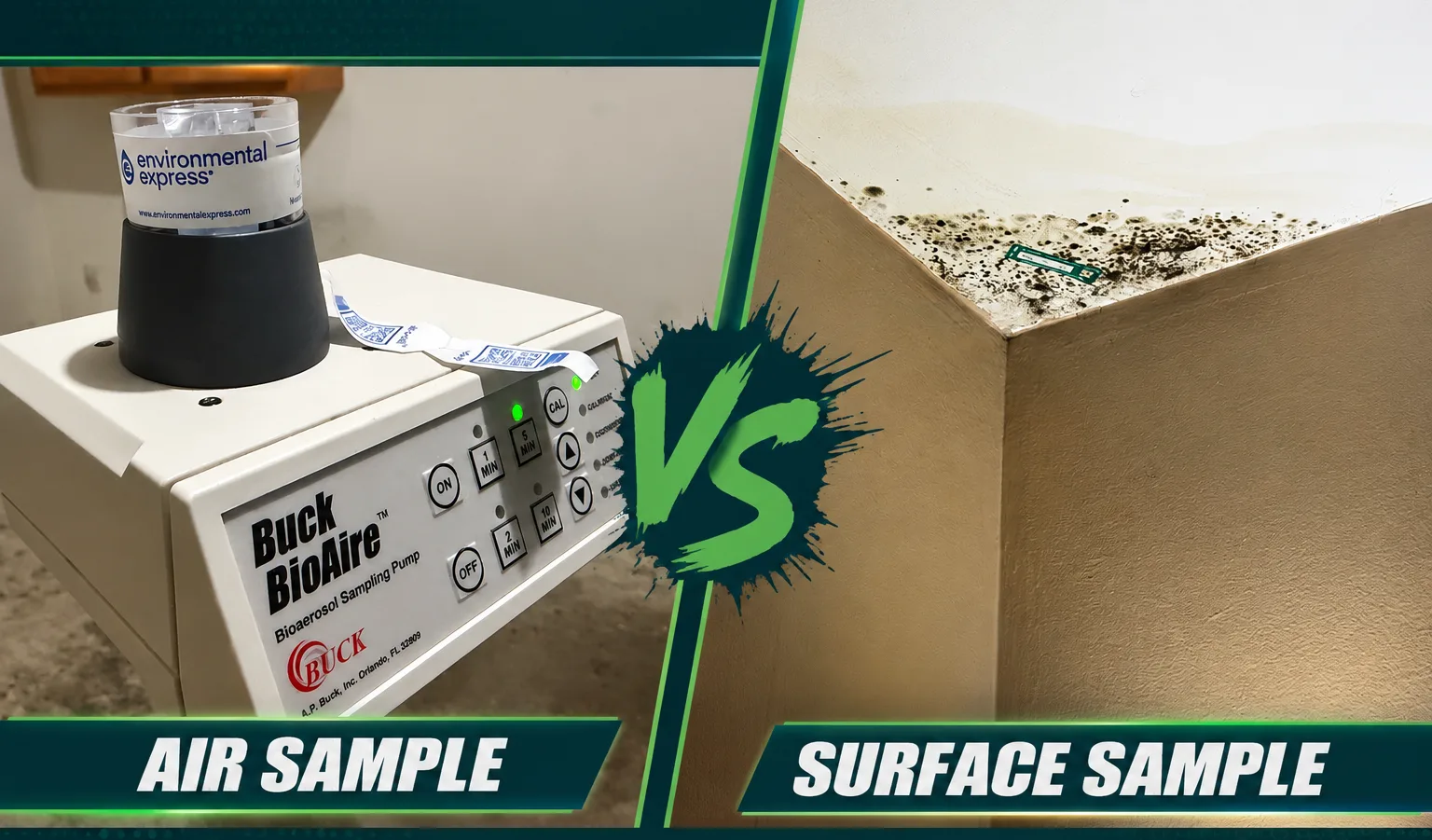
- Sample. Air samples are collected with calibrated equipment onto spore trap cassettes, along with an outdoor control sample taken the same day at the same property. Surface or tape lift samples are collected where visible growth is present.
- Analyze. Samples go to a third-party AIHA and NVLAP accredited laboratory.
- Report. Observations, instrument readings, laboratory data, and the indoor-to-outdoor comparison, with recommendations kept separate from findings.
The steps after the scan are what turn a colorful picture into something defensible. A report built on thermal images alone is not an assessment. If you're weighing this during a home purchase, our guide to the 3 reasons to get a mold test before closing covers how this fits into an inspection contingency.
Questions worth asking whoever you hire
If someone is bringing a thermal camera to your home, these four questions will tell you quickly whether they know how to use it.
- Will you confirm every thermal finding with a moisture meter? The answer should be yes without hesitation.
- What are today's conditions and will they affect the scan? A competent inspector will already be thinking about indoor to outdoor temperature differential and recent sun exposure.
- Will you collect an outdoor control sample? Without one, indoor spore counts have nothing meaningful to be compared against.
- Do you also perform remediation? If yes, the person telling you how bad it is stands to be paid to fix it.
Why we test only
Spore Shield does not perform remediation. No crew, no cleanup services, no referral fees from remediation companies.
Thermal imaging makes that independence concrete. A thermal camera in the hands of a company that sells cleanup can turn every cold spot into a reason to open a wall. In the hands of a testing-only company, a cold spot is a question to be answered by a moisture meter, and the answer is frequently that it is an insulation gap and nothing more.
Clear results are a normal and common outcome. A report that says so, in writing, is worth having.
Areas we serve
Independent mold inspection and air quality testing across Metro Detroit and Southeast Michigan — see all service area locations, including:
- Oakland County: West Bloomfield, Bloomfield Hills, Birmingham, Royal Oak, Troy, Farmington Hills, Novi, Rochester Hills, Southfield, Ferndale, Berkley, Clawson, Waterford, Commerce Township, Wixom, Auburn Hills
- Wayne County: Livonia, Northville, Plymouth, Canton, Dearborn, Grosse Pointe, Redford, Westland, Detroit
- Macomb County: Sterling Heights, Warren, Shelby Township, Macomb Township, Clinton Township, St. Clair Shores
- Washtenaw County: Ann Arbor, Ypsilanti, Saline, Dexter, Chelsea
Frequently asked questions
Direct answers to the questions people ask most about thermal imaging and mold.
Can a thermal camera see mold behind a wall?
Can a thermal camera see through walls?
Is thermal imaging worth it for a mold inspection?
Does thermal imaging damage anything or leave marks?
Can I rent a thermal camera and check my own house?
Does a home inspector's thermal camera cover mold?
Do you use thermal imaging on every inspection?
Book an independent mold inspection
Thermal imaging, moisture meters, borescope inspection, and calibrated air sampling analyzed by a third-party AIHA and NVLAP accredited laboratory. Certified, insured, and testing-only. Serving Metro Detroit and Southeast Michigan.
Call (248) 955-2269 or contact us to schedule.
Test Your Home
Today!
Trusted by Michigan families, Spore Shield delivers fast, accurate mold testing. Pick a time online in minutes.
Book Your Inspection