
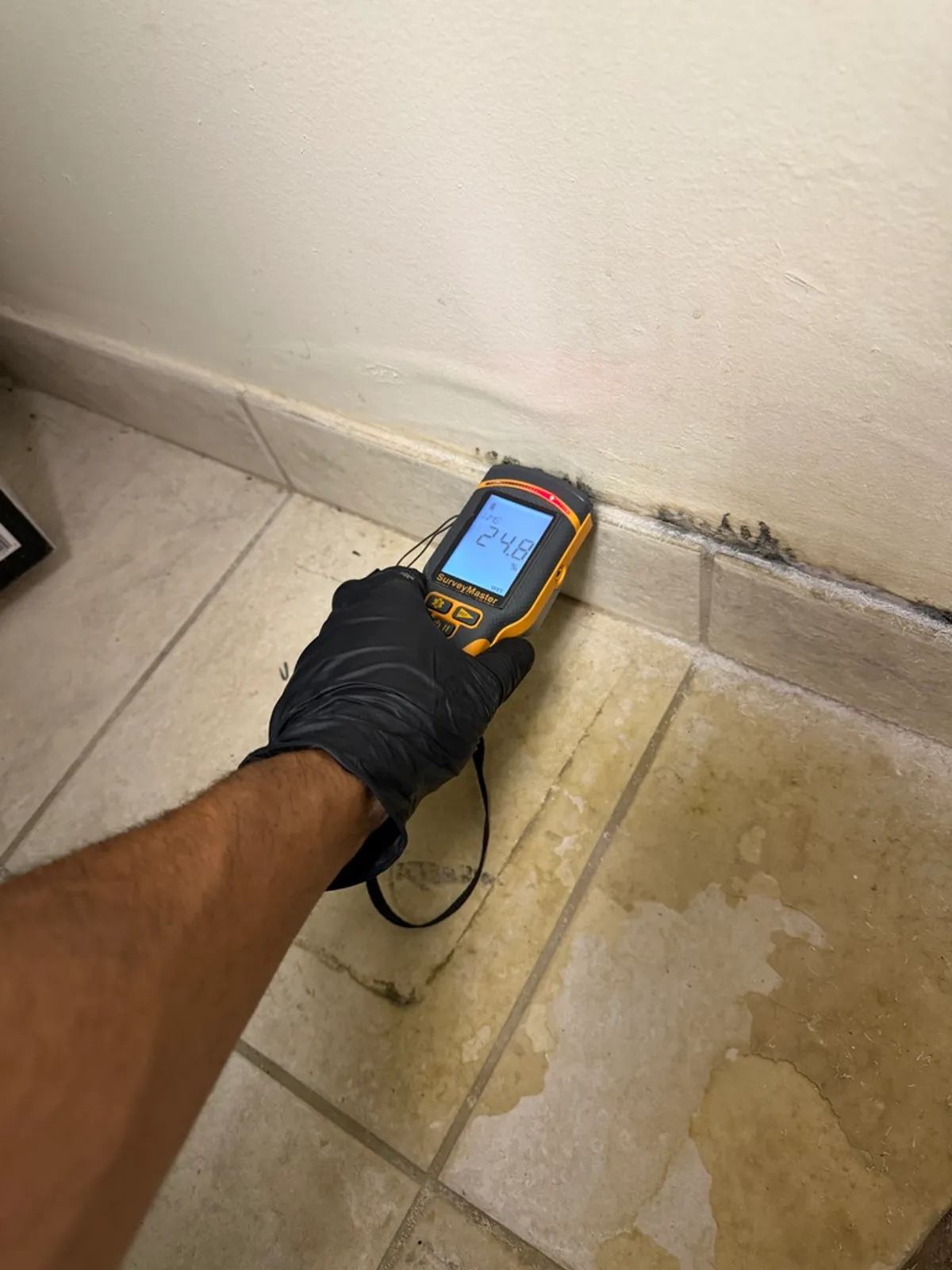
No. A moisture meter does not detect mold. It measures how much moisture is in a building material, such as drywall, wood, or plaster. That matters for mold because mold cannot grow without moisture, so finding where a material is wet tells an inspector where growth is possible and, more importantly, why it is happening. The meter finds the water. The water is what feeds the mold.
If you understand that one distinction, you already understand the tool better than most of the marketing around it.
What a moisture meter measures
Water conducts electricity. Dry building materials do not conduct it well. A moisture meter takes advantage of that difference. It sends a small electrical signal into or across a material and reads how easily that signal travels. More moisture means a stronger signal, which the meter translates into a number on the screen.
That number is not a mold reading. It is a moisture reading. A high number tells you a material is wet. It does not tell you anything is growing, and a low number does not guarantee a material is clean. It tells you about water, and water is the thing worth chasing.
Not sure if that damp spot is mold?
Snap a photo and get a free AI analysis in about 60 seconds, no appointment needed.
Pin vs pinless: two ways to measure
Most professional meters offer two modes, and the better tools combine both in a single unit. They answer different questions.
Pin mode
Two sharp probes press into the material. The meter measures electrical resistance between the two pins and reports the moisture content at that exact spot.
- Strength: a precise, localized reading inside the material, not just at the surface
- Trade-off: it leaves two very small pinholes, and it only reads the small area between the probes
- Best for: confirming a specific spot, checking wood and framing, verifying how deep a moisture problem goes when you can reach the material
Pinless mode
A flat sensor rests against the surface and reads roughly an inch below it using a scanning field. No probes, no holes.
- Strength: fast, non-invasive, and it can cover a large area quickly without marking anything
- Trade-off: it reads a general area rather than a precise point, and it is more easily thrown off by what is behind the surface
- Best for: searching a wall, floor, or ceiling to find where moisture might be before committing to a pin reading
In practice the two work together. You search with pinless, then confirm with pins. Search mode narrows the area. Pin mode gives the confirmed reading.
WME vs relative: why the number needs context
This is the part that separates someone who owns a meter from someone who knows how to read one.
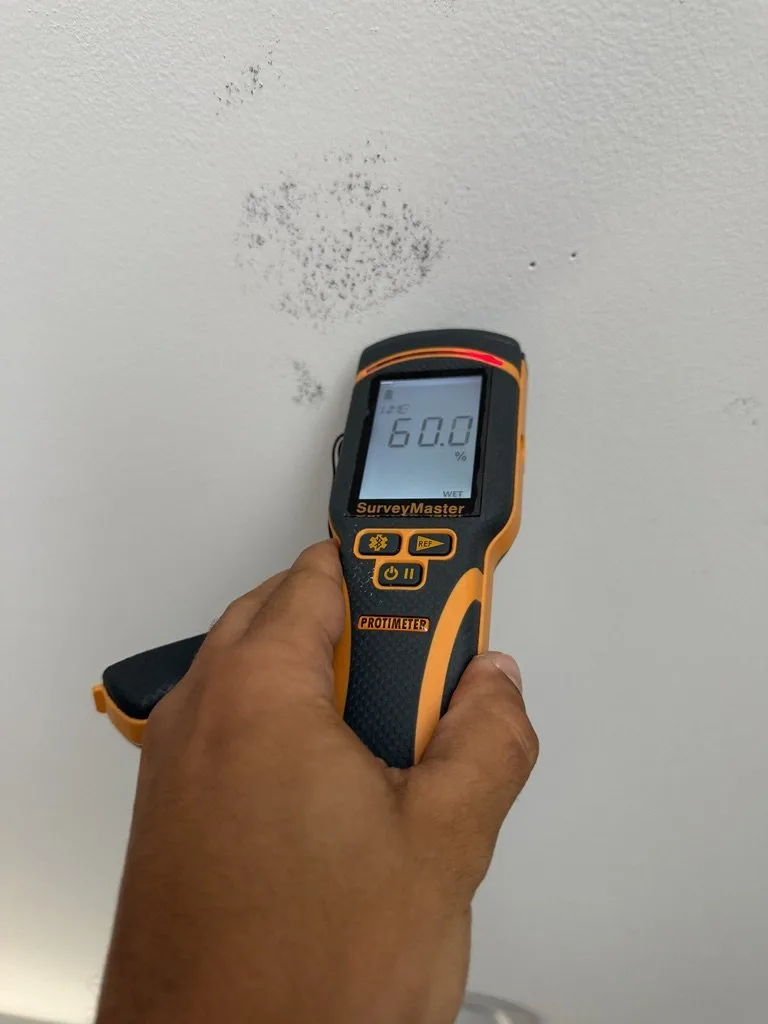
WME stands for wood moisture equivalent. Moisture meters are calibrated to wood, because wood has a well-understood and consistent relationship between its moisture content and its electrical conductivity. On wood, the number on the screen is a genuine moisture content percentage.
On other materials, that same number is a reference, not a percentage. Drywall, plaster, concrete, and masonry all conduct differently than wood. When you press pins into drywall, the meter still shows a number, but it is expressing that reading on the wood scale. It is a comparative reference, not a literal "this drywall is 20 percent water" measurement.
Relative readings need a control. In pinless search mode especially, a single number in isolation means very little. What makes it useful is comparison. You take a reading in an area you know is dry, then compare suspect areas against it. A spot reading five points above the dry baseline is meaningful. The same raw number with nothing to compare it to is just a number.
This is why a professional does not walk in, press a meter to one spot, read a number aloud, and call it a finding. The reading only means something relative to a dry control and interpreted for the material it came from.
Where a moisture meter fits in a mold inspection
The meter is a confirmation tool, and it works in sequence with everything else in the bag during a professional mold inspection.
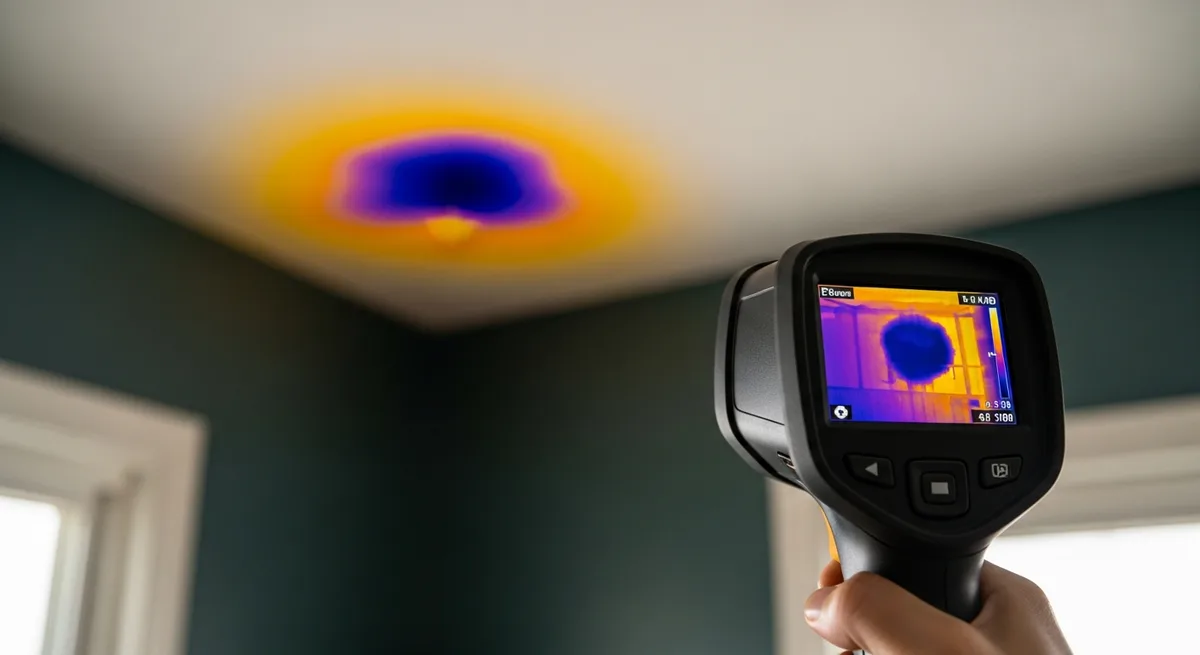
- Thermal imaging scans large areas and flags temperature differences that suggest moisture. It narrows hundreds of square feet down to a few. It cannot confirm moisture on its own. Our guide on what thermal imaging can and cannot detect covers why.
- The moisture meter confirms. Every spot the thermal camera flags gets checked. Search mode covers the area, pin mode confirms the specific location. If the meter does not find elevated moisture, the cold spot was something else, an insulation gap or an air leak, and it gets documented as such.
- Humidity and dew point readings establish whether the room conditions support condensation and growth.
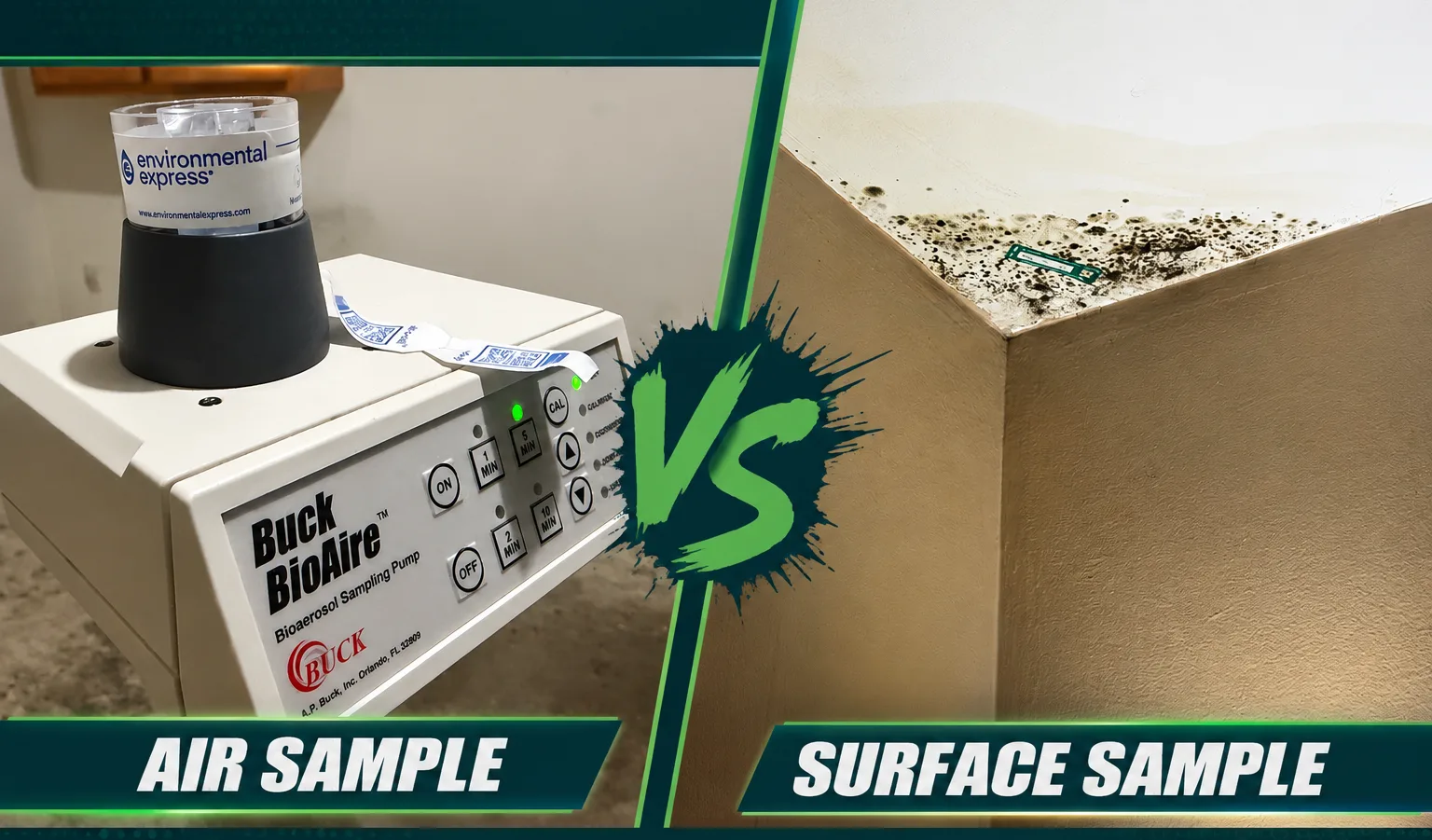
- Air sampling measures what is actually airborne, analyzed by a third-party accredited laboratory against a same-day outdoor control.
The meter sits in the middle of that chain. It turns a maybe from the thermal camera into a documented yes or no about moisture, without opening a wall to find out.
What a moisture meter cannot tell you
Being clear about the limits is how you tell a careful inspector from a confident one.
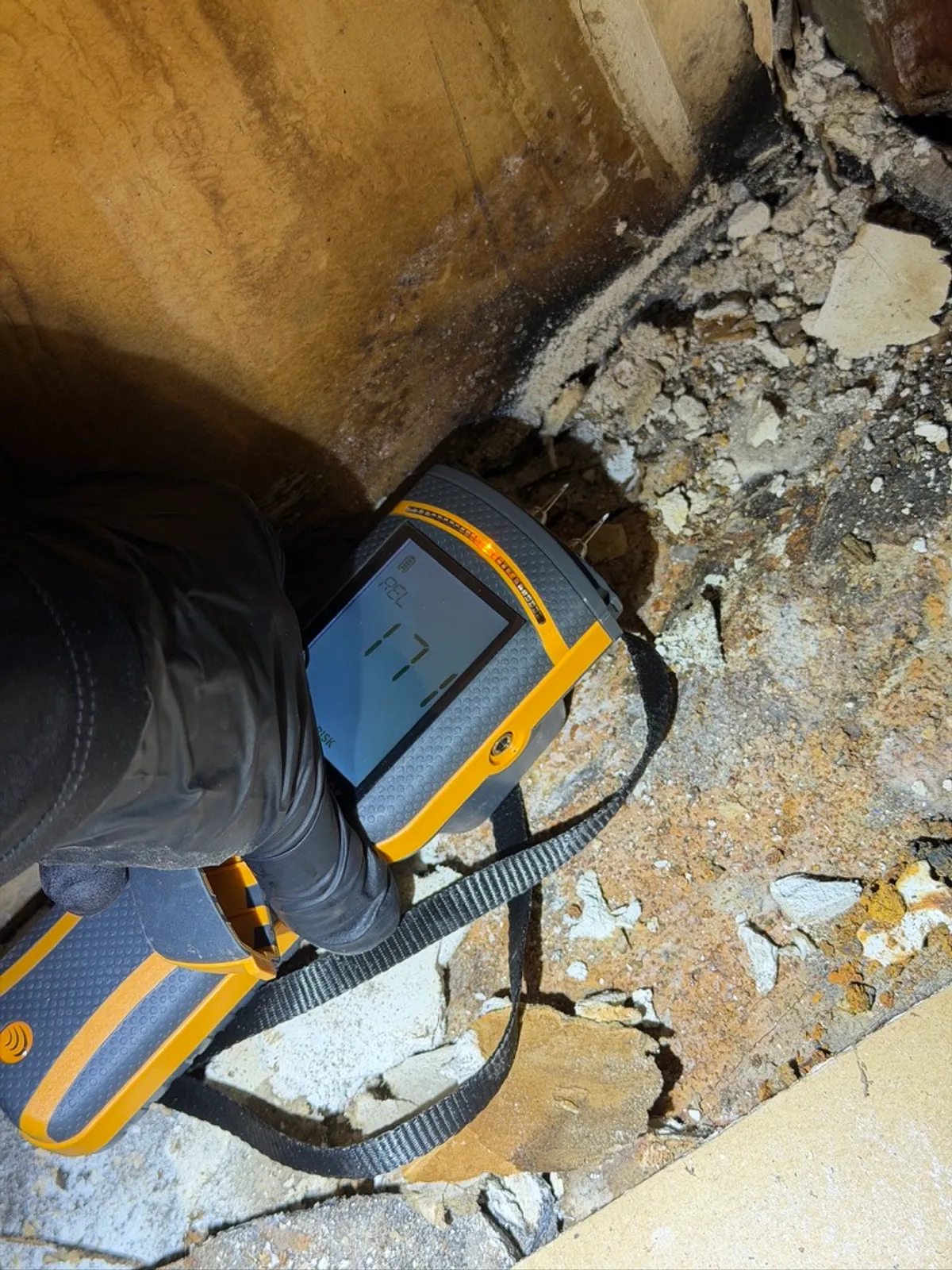
- It does not detect mold. It detects moisture. Growth is confirmed by observation and by laboratory analysis of samples, not by a moisture reading.
- It does not identify the source. A wet spot tells you there is water. It does not tell you whether the water came from a leak, condensation, or an event that has since dried. That takes investigation.
- Pinless readings are surface-limited. Moisture deep inside an assembly may not register at the surface, and materials behind the wall like foil-backed insulation or metal can distort a scan.
- A dry reading today is a snapshot. Moisture problems are often intermittent. A material that reads dry during a dry stretch can be wet after rain or during a humid week.
None of that makes the meter less valuable. It makes it one instrument in a process rather than a magic wand, which is exactly how it should be used.
Should you buy your own moisture meter?
You can, and inexpensive ones are widely available. If you are drying out a basement after a known leak and just want to watch a number trend down over a few days, a basic meter is genuinely useful for that.
What a meter will not do is replace an inspection. Interpreting a reading requires knowing the material, having a dry control to compare against, understanding the WME scale, and combining the reading with everything else, thermal imaging, humidity, visual assessment, and air sampling. The tool is cheap. The judgment around it is the actual service.
If you are buying a home, our guide to the 3 reasons to get a mold test before closing covers how moisture readings fit into a purchase decision.
Areas we serve
Independent mold inspection and air quality testing across Metro Detroit and Southeast Michigan. See all service area locations, including:
- Oakland County: West Bloomfield, Bloomfield Hills, Birmingham, Royal Oak, Troy, Farmington Hills, Novi, Rochester Hills, Southfield, Ferndale, Berkley, Clawson, Waterford, Commerce Township, Wixom, Auburn Hills
- Wayne County: Livonia, Northville, Plymouth, Canton, Dearborn, Grosse Pointe, Redford, Westland, Detroit
- Macomb County: Sterling Heights, Warren, Shelby Township, Macomb Township, Clinton Township, St. Clair Shores
- Washtenaw County: Ann Arbor, Ypsilanti, Saline, Dexter, Chelsea
Frequently asked questions
Does a moisture meter detect mold?
What is the difference between a pin and a pinless moisture meter?
What does WME mean on a moisture meter?
Why do inspectors take a dry reading first?
Can a moisture meter read through a wall?
Is a hardware store moisture meter good enough?
Book an independent mold inspection
Thermal imaging, moisture metering, borescope inspection, and calibrated air sampling analyzed by a third-party AIHA and NVLAP accredited laboratory. Certified, insured, and testing-only.
Serving Metro Detroit and Southeast Michigan.
Call (248) 955-2269 or contact us to schedule. Questions by email go to info@sporeshield.com.
Test Your Home
Today!
Trusted by Michigan families, Spore Shield delivers fast, accurate mold testing. Pick a time online in minutes.
Book Your Inspection