
3 Reasons to Get a Mold Test Before You Close on a House
Short answer: a mold test before closing costs a few hundred dollars and about 72 hours. Skipping it can cost tens of thousands after the keys change hands — because once you close, the problem inside the walls is yours, along with the remediation bill. Here are the three reasons we tell every Metro Detroit buyer to test before they sign.
Reason 1: Your home inspection almost certainly didn't check for mold
This surprises most buyers: a standard home inspection is not a mold inspection. General inspectors work visually — roof, foundation, electrical, plumbing. If mold isn't in plain sight during their two-hour walkthrough, it doesn't make the report, and most inspection agreements exclude mold in the fine print.
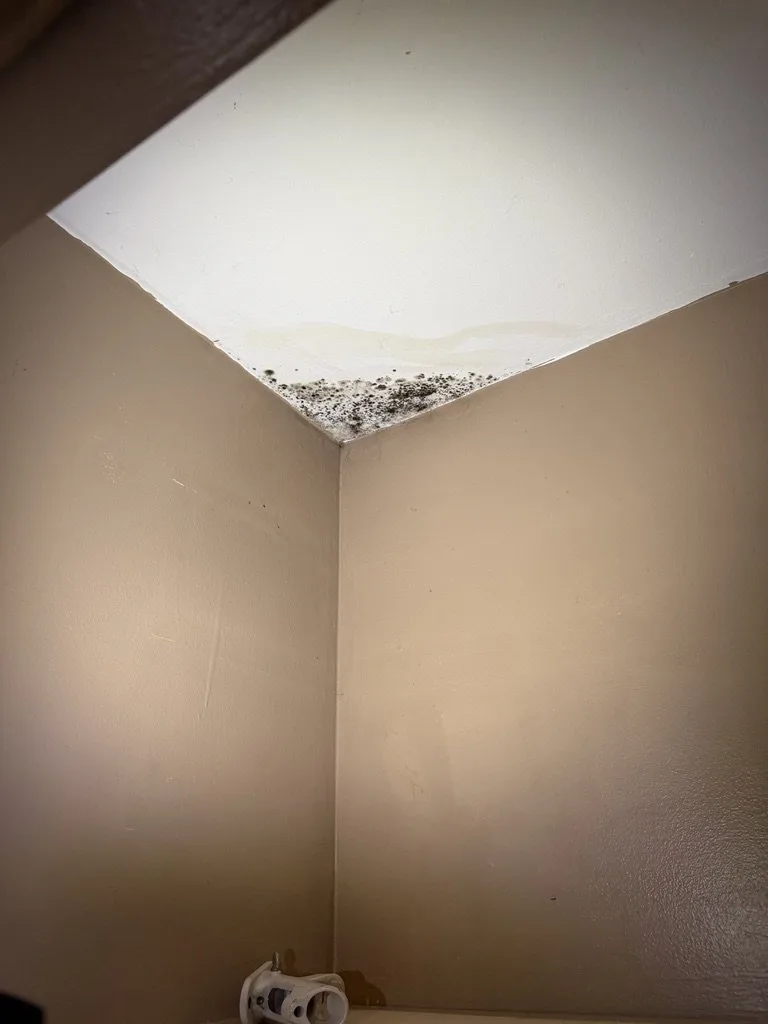
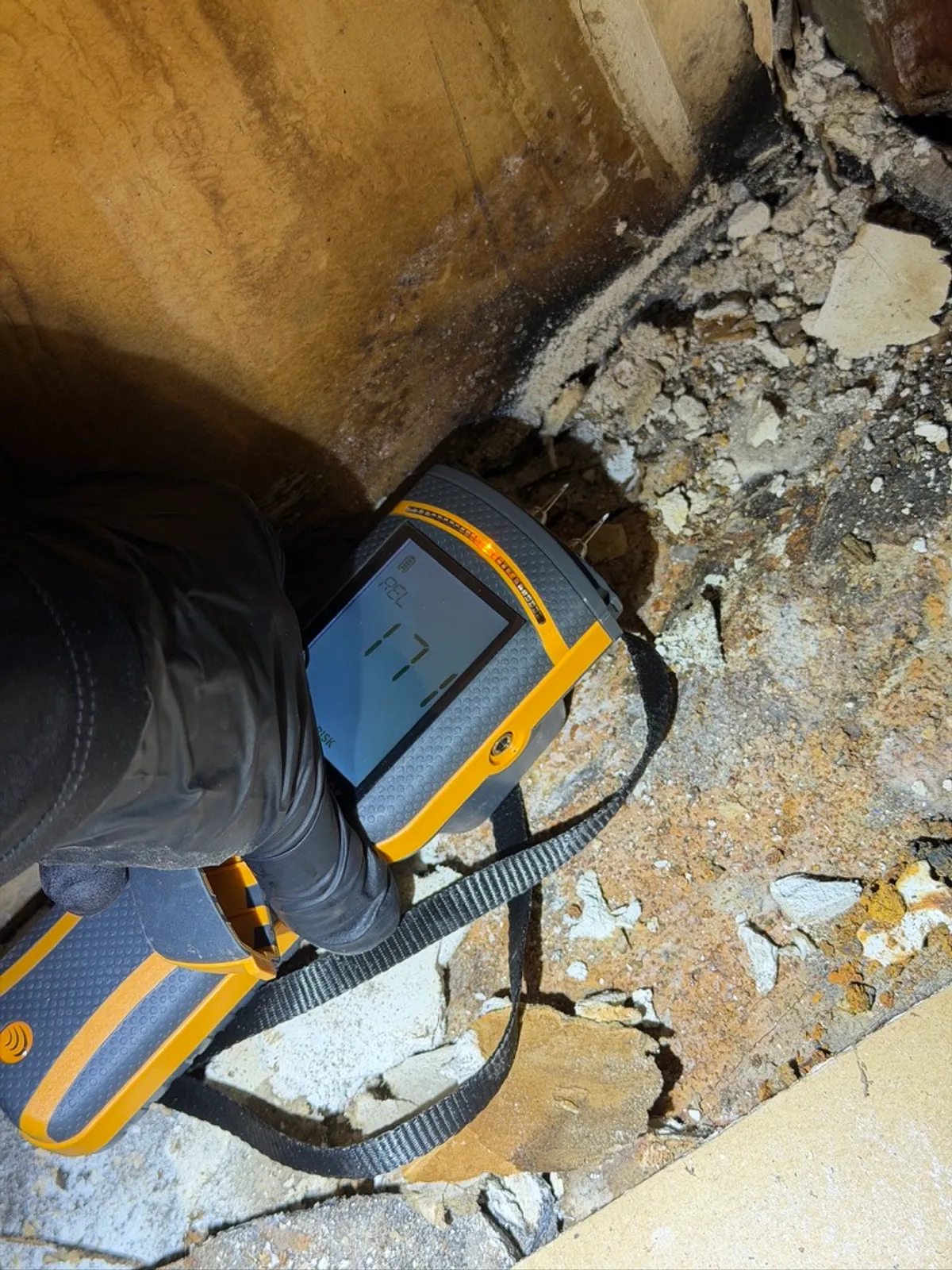
The problem is that the expensive mold is almost never in plain sight. It grows on the back side of drywall, under vinyl flooring, above drop ceilings, and inside wall cavities that stayed damp after an old leak — our guide to mold and drywall shows exactly what that hidden progression looks like. A dedicated real estate mold inspection adds what the general inspection can't: moisture mapping, thermal imaging, and lab-analyzed air samples compared against an outdoor control. That's the difference between "we didn't see anything" and "we measured, and here's the data."
- Home inspection: visual only, mold typically excluded from the contract
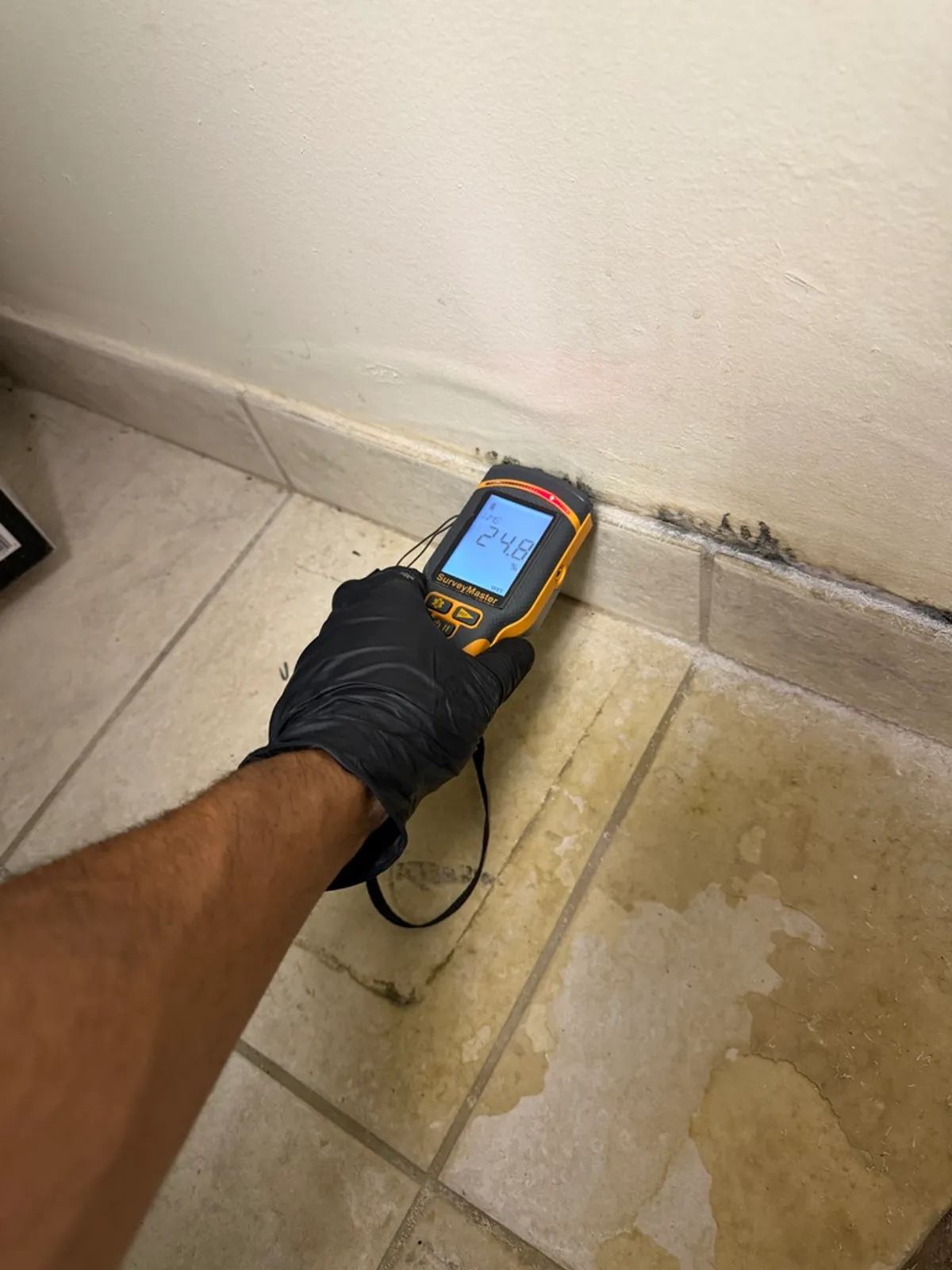
- Mold test: moisture meters, thermal imaging, spore-trap air samples, AIHA-accredited lab analysis
- Timeline: about an hour on site, lab results in roughly 72 hours — inside any normal inspection contingency
Not sure if what you're seeing is mold?
Snap a photo and get a free AI analysis in about 60 seconds — no appointment needed.
Reason 2: Sellers stage houses — walls keep secrets
Sellers prepping a house for market repaint, re-caulk, deodorize, and stage. None of that is sinister — but fresh paint over a previously wet wall hides the tide lines, and a scented, well-ventilated open house masks the musty odor that would otherwise be your first warning. Michigan's disclosure form relies on what the seller knows; a leak that was "dried out" with fans three winters ago and never verified with a moisture meter may not appear on it at all.
Metro Detroit housing stock makes this worse. Finished basements against below-grade masonry, ice-dam ceiling stains that fade by spring, and decades-old plumbing mean a home can look immaculate in July while a wall cavity has been feeding a colony since February. Air sampling catches what staging hides: elevated indoor spore counts of indicator species relative to outdoors say "something is growing in here" even when every surface looks perfect. If you're curious how that works, see our breakdown of air vs. surface mold samples.
Reason 3: Leverage before closing — liability after
Timing is everything. Before closing, a lab-documented mold report is negotiating power. Inside your inspection contingency you can require the seller to remediate with clearance testing, negotiate a credit or price reduction that reflects the real scope, or walk away with your earnest money intact.
After closing, the same report is just a bill with your name on it. Remediation plus rebuild for a colonized wall or basement routinely runs into five figures — our article on the cost of ignoring mold walks through how fast the numbers climb. Homeowner's insurance rarely helps, because most policies exclude mold resulting from long-term moisture that predates your ownership. And if the problem involves certain species, there's a health dimension too — see the health risks of black mold exposure — that matters even more if kids, elderly family members, or anyone with asthma is moving in.
What a pre-purchase mold test looks like
- Visual and moisture assessment — every wet-prone area (basement, bathrooms, attic, around HVAC) is checked with a professional moisture meter, not just eyes
- Thermal imaging — an infrared camera flags hidden damp spots behind finished surfaces
- Air sampling — spore-trap cassettes indoors compared against an outdoor control sample
- AIHA-accredited lab analysis — species and concentrations, in writing, in about 72 hours
- A report built for the transaction — something you can hand to your agent, your lender, or the seller's side
One thing that matters when choosing who does it: use an independent testing company that does not sell remediation. A tester who also remediates has a financial incentive to find a big problem. We only test — so the report says what the lab says, nothing more. Buyers' agents can find more detail in our guide to mold inspections for real estate agents.
Frequently Asked Questions
What buyers ask us most about mold testing during a home purchase.
Does a standard home inspection check for mold?
How much does a pre-purchase mold test cost?
How long does a mold test take? Will it delay my closing?
Can I negotiate the price if mold is found?
The house looks clean and smells fine. Do I still need a mold test?
Should the buyer or the seller pay for the mold test?
Buying in Metro Detroit? Test before you sign
Spore Shield provides independent real estate mold inspections across Metro Detroit and Oakland County, with certified lab results in about 72 hours — fast enough for any inspection contingency. We test, we never remediate, so there's no conflict of interest in your report.
Call (248) 955-2269 or view our pricing and packages to schedule before your contingency window closes.
Test Your Home
Today!
Trusted by Michigan families, Spore Shield delivers fast, accurate mold testing. Pick a time online in minutes.
Book Your Inspection