
Roof Leak and Mold in the Attic: The Hidden Problem Above Your Ceiling
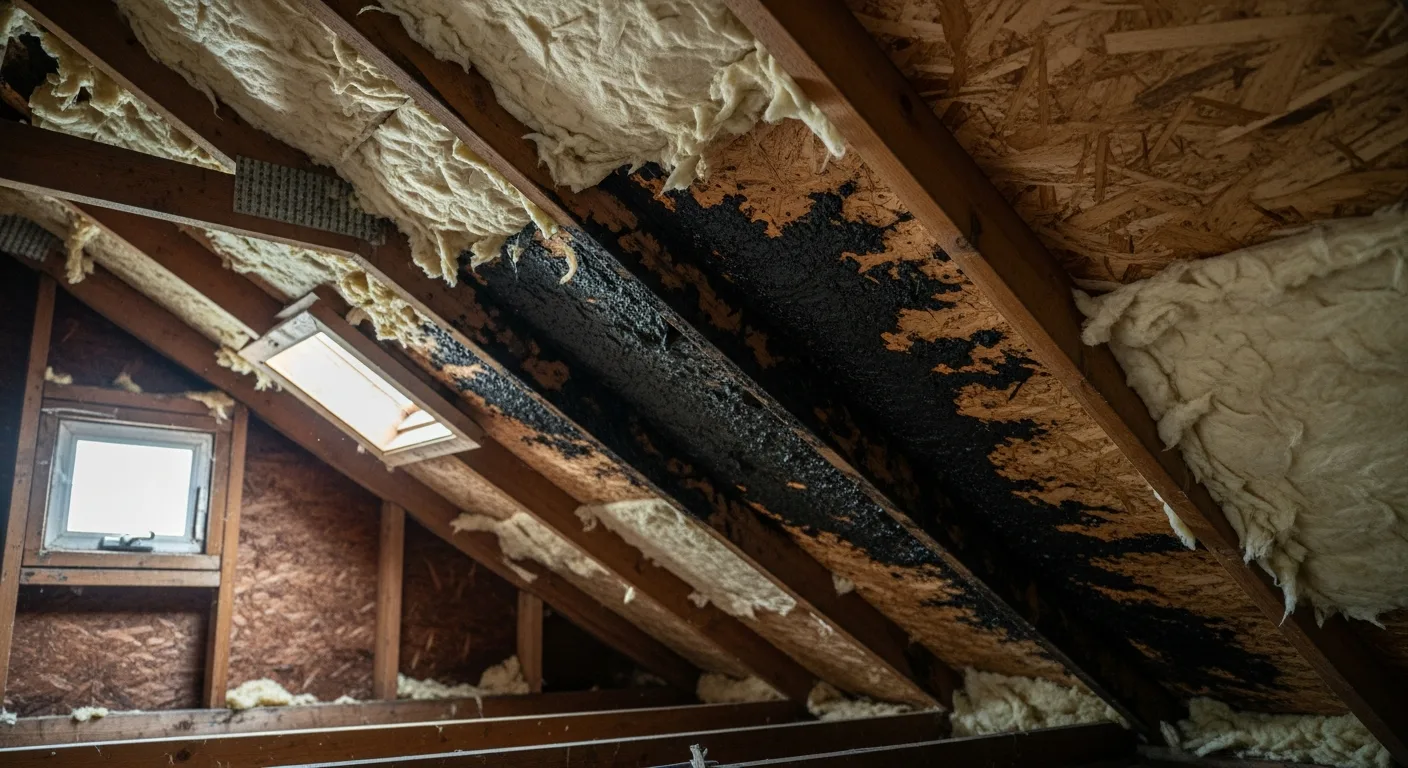
A roof leak rarely announces itself. There is no burst pipe, no flooded floor, no dramatic moment. Instead, water finds its way past a cracked shingle or a failed flashing seal, soaks into the wood and insulation above your ceiling, and quietly creates the exact conditions mold needs to thrive. By the time a brown ring shows up on a bedroom ceiling, the problem in the attic is usually well underway.
This guide explains how a roof leak turns into attic mold, why it so often goes unseen, how it affects the air in the rooms below, and what to do about it, with a Southeast Michigan homeowner in mind.
Key Takeaways
- Mold can start growing within 24 to 48 hours of wood or insulation getting wet, so a slow roof leak is a reliable mold factory.
- Attic mold grows on the underside of the roof deck and rafters, hidden above your insulation, often long before any ceiling stain appears.
- Spores do not stay in the attic. The stack effect draws attic air down into your living space, so hidden mold can affect the air you breathe.
- Fixing the roof stops the water, but it does not remove the mold that already grew. Testing confirms whether a problem remains after the repair.
Not sure if what you're seeing is mold?
Snap a photo and get a free AI analysis in about 60 seconds — no appointment needed.
How a Roof Leak Becomes an Attic Mold Problem
Mold needs three things to grow: moisture, a food source, and time. A roof leak delivers all three. The moisture is the water itself. The food source is everywhere in an attic, because wood sheathing, rafters, paper-faced insulation, and accumulated dust are all organic material mold happily digests. And time is on mold's side, because a leak that drips a little with every rain can keep that wood damp for weeks or months.
The speed is what surprises most homeowners. Mold can begin colonizing a wet surface within 24 to 48 hours. An attic that stays humid after a leak does not need a downpour to keep going, it just needs to stay damp. That is why a small, intermittent leak can produce a surprisingly large patch of growth across the roof deck.
Why Southeast Michigan Attics Are Especially Vulnerable
Our climate stacks the deck against attics. Winter brings snow load, ice dams, and freeze-thaw cycles that lift and crack shingles and open up flashing seams. Then humid Michigan summers turn a poorly ventilated attic into a hot, moist box, which is close to ideal for mold. Add the region's older housing stock, where roofs, flashing, and attic ventilation may be decades old, and you have a recipe for hidden moisture.
Roof leaks are not the only way an attic gets wet, either. Poor ventilation and everyday condensation can feed attic mold even without a leak, which is a close cousin of the HVAC and humidity problems we cover in our guide to indoor air quality testing for Michigan homes. The EPA's guidance on mold and moisture is blunt about the fix: control the moisture and you control the mold.
The Hidden Problem: Why You Do Not See It
Here is the part that makes attic mold so sneaky. It grows in a place you almost never look, on surfaces that face away from you. A roof leak wets the underside of the roof sheathing and the tops of the rafters, and mold colonizes there, above your insulation and out of your line of sight. A homeowner can walk through the house for months with no idea anything is wrong overhead.
The clues usually arrive indirectly, in this rough order:
- A faint musty or earthy smell, strongest near the attic hatch, upstairs closets, or top-floor rooms.
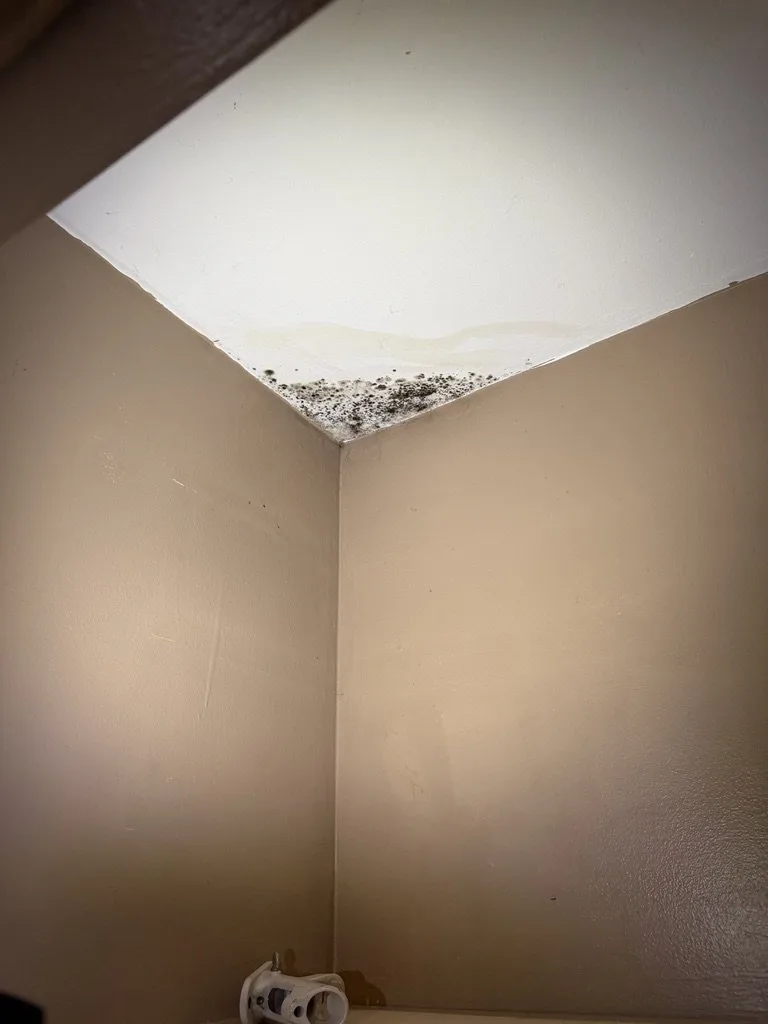
- Water stains that finally appear on a ceiling or at the top of a wall, meaning the leak has been active for a while.
- Peeling paint, bubbling drywall, or a sagging spot on an upper-floor ceiling.
- Allergy-like symptoms, congestion, or headaches that ease when you leave the house.
Because the visible signs lag so far behind the actual growth, the smell and the symptoms are often your earliest warning. Our guide to the early signs of mold in your home walks through what those first clues look like before anything shows on the ceiling.
How Attic Mold Affects the Air You Breathe
It is tempting to assume that mold in the attic stays in the attic. It does not. Homes breathe through a phenomenon called the stack effect: warm air rises and escapes through the upper levels, and that upward flow pulls attic air down into your living space through gaps around recessed lights, ceiling fixtures, the attic hatch, and other penetrations. Mold spores ride that air current straight into the rooms where your family sleeps.
That is why attic mold is a health issue, not just a building issue. Exposure to elevated indoor spore levels is associated with coughing, nasal congestion, throat irritation, headaches, and worsening asthma and allergy symptoms, with children, older adults, and immune-compromised people most affected. For a research-based look at the specifics, see our guide on the health risks of black mold exposure.
The Critical Mistake: Fixing the Roof Is Not the End
This is the single most important thing to understand about a roof leak and attic mold. Repairing the roof stops new water from coming in. It does absolutely nothing to remove the mold that already grew while the leak was active. The colony on your roof deck does not dry up and disappear once the shingle is replaced.
Two things are commonly left behind even after a competent roof repair:
- Established mold growth on the sheathing and rafters that needs to be assessed and, if warranted, professionally remediated.
- Saturated insulation and slow-drying wood that can keep humidity high and let mold linger even though the leak is fixed.
So the sequence that actually protects your home is: fix the roof, then find out what the water left behind. Skipping the second step is how homeowners end up with a repaired roof and an ongoing mold problem they still cannot see.
Why Testing Comes Before Assumptions
After a roof leak, the honest answer to “do I have a mold problem?” is usually “let's find out,” not “probably not, it looks dry.” Not every dark streak in an attic is mold, rusted roofing nails and old water stains fool people constantly, and not every attic that smells musty has dangerous spore levels. Guessing in either direction is expensive.
That is where independent testing earns its place. Because Spore Shield only tests and never remediates, there is no incentive to find a problem that is not there or to talk you into a repair. Our process for a suspected roof-leak mold issue includes:
- A visual inspection of the attic and the rooms below, looking for staining, growth, and moisture pathways.
- FLIR thermal imaging and moisture meters to locate damp sheathing and wet insulation that the eye cannot see. Thermal imaging finds moisture, not mold, so it is paired with sampling.
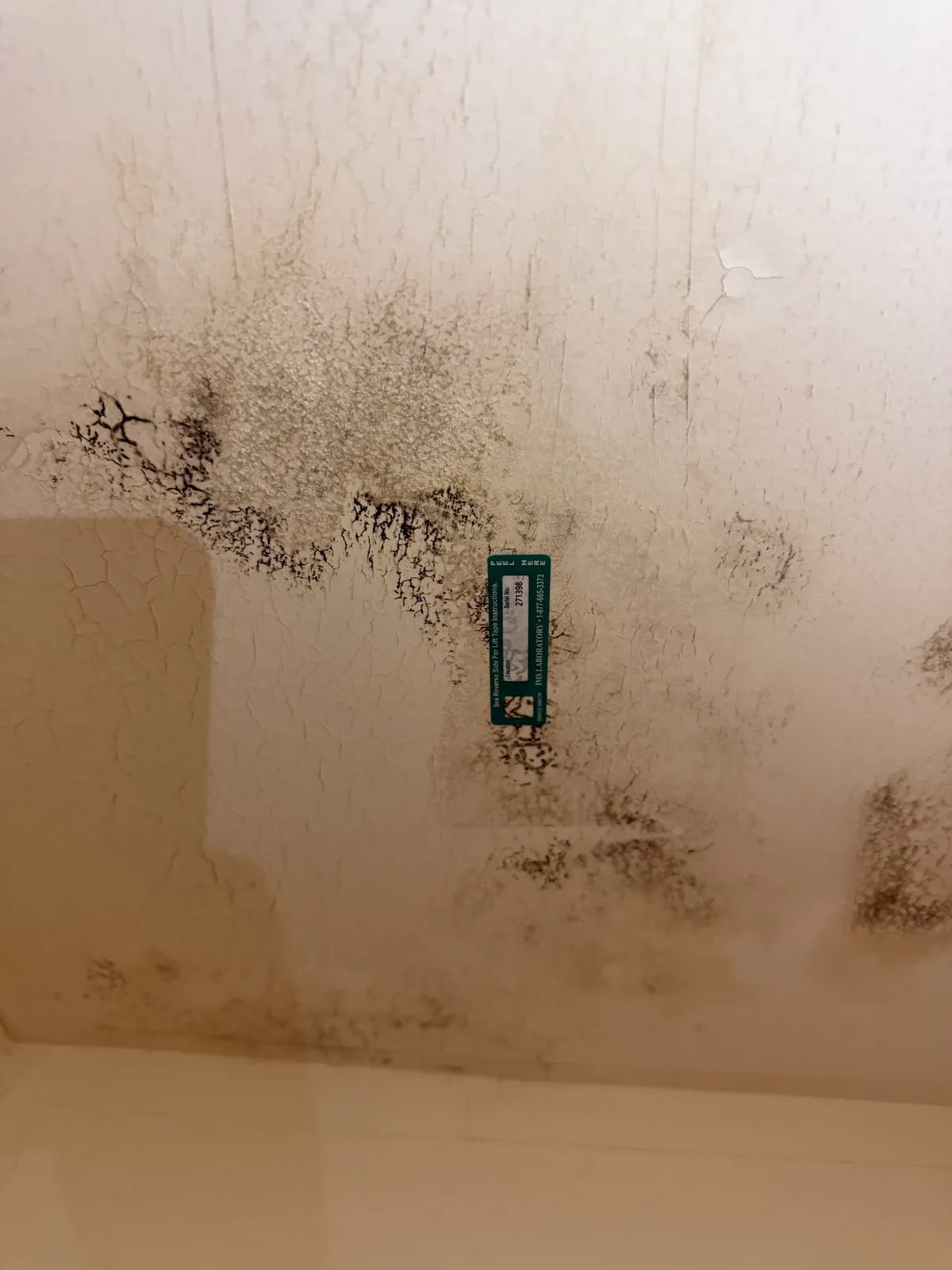
- Buck BioAire air sampling that compares indoor spore levels to an outdoor control, plus surface sampling where growth is visible.
- Analysis by a certified third-party AIHA and NVLAP-accredited lab, with a clear written report and next steps, typically within 72 hours.
The result is a defensible, unbiased picture of whether spore levels are actually elevated and whether hidden growth remains, so any remediation you pay for is based on facts. Our indoor air quality testing page explains the equipment and method in more detail.
What to Do If You Suspect a Roof Leak Caused Attic Mold
- Address the water first. Have the roof inspected and the leak repaired so no new moisture is entering the attic.
- Do not disturb visible growth. Scraping or brushing at attic mold releases spores, avoid DIY cleanup on a large area.
- Get independent testing. Confirm whether spore levels are elevated and whether hidden growth remains after the repair.
- Use a qualified remediation contractor if needed, then get independent post-remediation clearance testing to verify the work succeeded. A clearance report should come from a testing company, not the remediator.
If you would like a fast, no-cost starting point, Spore Shield AI gives an instant mold-risk read in about a minute. It is not a substitute for professional testing, but it is a helpful gut check when you have just spotted a stain and are not sure how worried to be.
Local Help Across Oakland County
Spore Shield provides certified, testing-only mold assessments throughout Southeast Michigan, including West Bloomfield, Bloomfield Hills, Birmingham, Troy, and Royal Oak. If a roof leak has you worried about what is happening above your ceiling, call us at (248) 955-2269 or request a free consultation. We test, we do not remediate, and our findings are yours to act on.
Frequently Asked Questions
Clear answers to the questions Southeast Michigan homeowners ask most about roof leaks and attic mold.
How long does it take for a roof leak to cause mold in an attic?
Can I have mold in my attic without seeing it on the ceiling?
Is attic mold from a roof leak dangerous to my health?
Should I test for mold after a roof leak even if it looks dry now?
What is the difference between attic mold and normal attic staining?
Test Your Home
Today!
Trusted by Michigan families, Spore Shield delivers fast, accurate mold testing. Pick a time online in minutes.
Book Your Inspection