
Black Mold Health Risks: What the Research Actually Shows

"Black mold" — usually a reference to Stachybotrys chartarum — has become one of the most searched and most misunderstood household concerns. Some of what circulates online dramatically overstates the danger, while other sources brush it off entirely. Neither is accurate. The honest answer, grounded in published research, is that indoor mold can affect your health in specific, well-documented ways, and the only way to know what you're actually dealing with is to test.
This guide walks through what the science actually supports about black mold and health, the symptoms worth paying attention to, why color tells you almost nothing, and how certified testing gives Michigan homeowners a clear answer instead of a guess.
Is Black Mold Actually Dangerous? What the Research Says
The strongest evidence on mold and health comes from two landmark reviews: the WHO 2009 Guidelines for Indoor Air Quality: Dampness and Mould and the Institute of Medicine's 2004 report Damp Indoor Spaces and Health. Both reach a similar conclusion: indoor dampness and visible mold are reliably associated with upper-respiratory symptoms, cough, wheeze, and the worsening of asthma in children and adults.
The CDC mold facts page and the EPA Brief Guide to Mold, Moisture, and Your Home echo the same point: the public-health concern is genuine, and it is primarily respiratory. What the evidence does not support is the popular claim that "toxic black mold" causes a sweeping list of severe, unrelated illnesses. The documented risk is narrower than the internet suggests — but it is real, which is exactly why the WHO recommends avoiding indoor mold growth as a precaution rather than waiting for symptoms.
Are black mold spores dangerous to breathe?
The health effects of black mold come from breathing its airborne spores and fragments, not from the visible colony on the wall itself. When Stachybotrys — or the far more common Aspergillus and Penicillium molds — is disturbed by air movement, cleaning, or renovation, it releases spores that can irritate the airways. For most healthy adults that means temporary respiratory irritation; for children, older adults, and anyone with asthma or a weakened immune system, elevated spore counts are more likely to trigger meaningful symptoms. What matters isn't the color of the growth but how many spores are actually in the air you breathe — which is precisely what certified air sampling measures.
Not sure if what you're seeing is mold?
Snap a photo and get a free AI analysis in about 60 seconds — no appointment needed.
Health Symptoms Linked to Mold Exposure
Most people who react to indoor mold notice respiratory and irritation symptoms. These are associations reported across the research, not a diagnosis — but they are the signs most worth taking seriously, especially if more than one person in the home is affected.
- Coughing, sneezing, or a persistently runny or stuffy nose
- Throat irritation and a scratchy or hoarse voice
- Watery, red, or itchy eyes
- Worsening asthma symptoms or more frequent flare-ups
- Skin irritation in some sensitive individuals
- Headaches or fatigue that some people report indoors
The timing clue that matters most
One of the more reliable indicators is timing. If symptoms ease when you leave the house for a day or two and return when you come back, the indoor environment is worth investigating. That pattern is common enough that it's often the first thing that prompts a homeowner to call for testing.
Who is most at risk
Anyone can react to mold, but some groups are notably more vulnerable: infants and young children, older adults, pregnant individuals, and people with asthma, allergies, COPD, or a compromised immune system. For these individuals, even moderate elevations in airborne spore counts can trigger meaningful symptoms — which is the strongest argument for testing early rather than waiting for the problem to announce itself.
"Toxic Black Mold" vs. the Mold You Actually Find
The species popularly called "toxic black mold," Stachybotrys chartarum, generally requires sustained water damage on cellulose materials — wet drywall paper, ceiling tiles, cardboard, and similar surfaces — and it is found far less often than people assume. The molds that most frequently drive elevated spore counts in a Michigan home are Aspergillus and Penicillium species, which can grow on a wider range of damp surfaces.
This matters because the risk profile differs by species, and you cannot tell them apart by eye. That is why laboratory speciation — identifying exactly what is present and at what concentration — is far more useful than a visual guess about whether a dark patch is "the bad kind."
Why You Can't Identify Black Mold by Sight
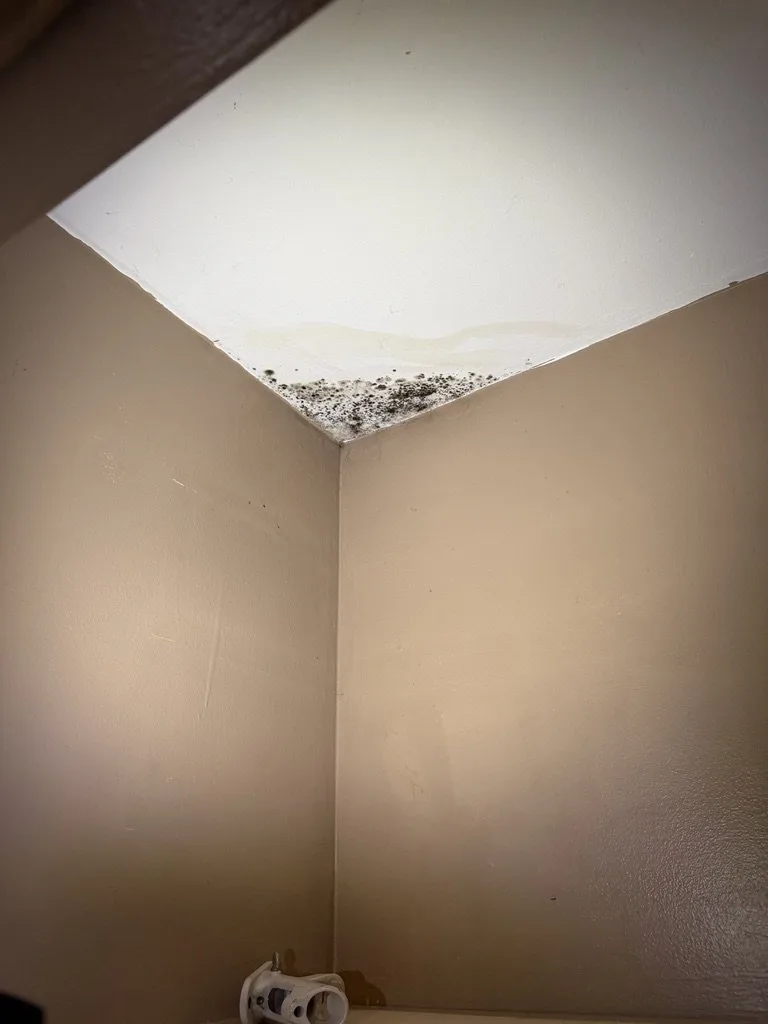
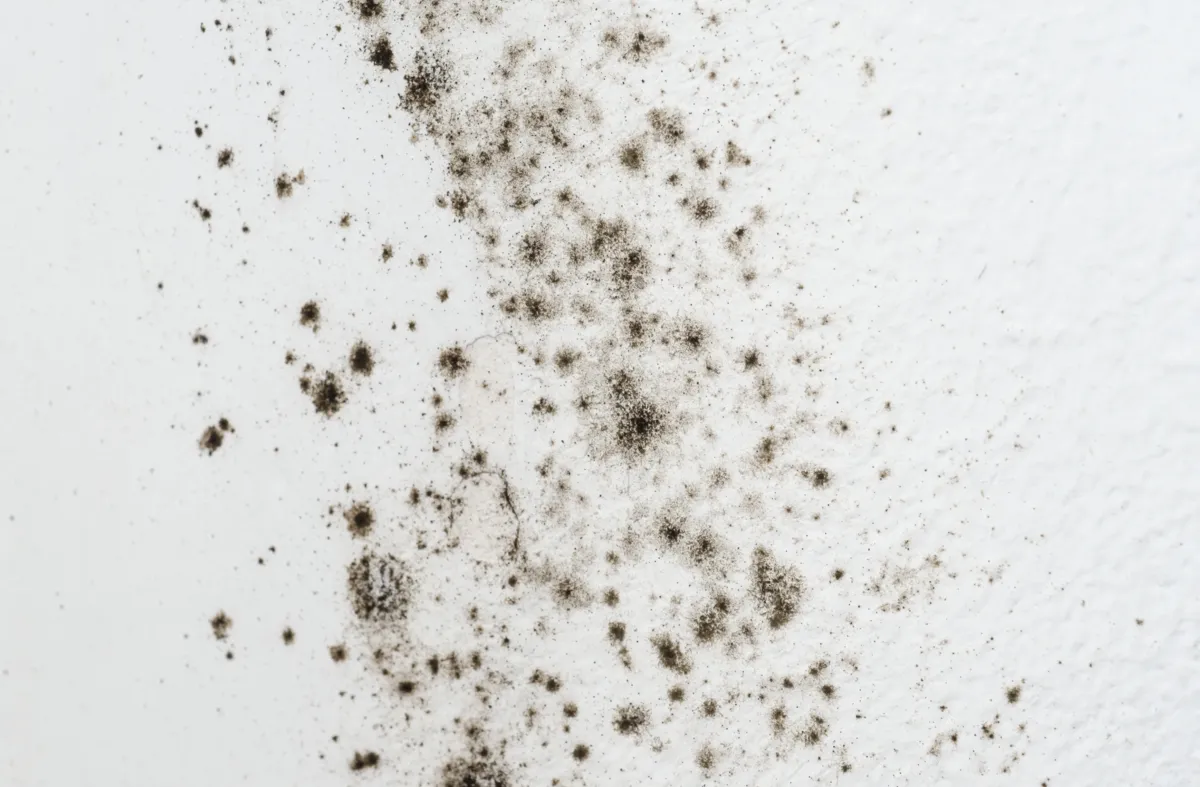
Color is one of the least reliable signals in mold assessment. Plenty of harmless molds look black or dark green, while genuinely problematic growth is often hidden inside wall cavities, above ceilings, under flooring, or inside HVAC systems where it never becomes visible. A surface that looks alarming may be minor, and a wall that looks perfectly clean may have an active colony behind it.
That hidden quality is also why a general home inspection often misses mold. A standard inspector checks for visible defects; confirming hidden growth and measuring what's airborne takes different tools entirely — the kind covered in our companion guide on why air quality testing matters for Michigan homes.
How Professional Testing Confirms What's in Your Air
Accurate answers come from a defined process, not a flashlight and a hunch. A Spore Shield inspection combines moisture detection with certified lab sampling so you know both where moisture is hiding and what is actually circulating in the air your family breathes.
- FLIR thermal imaging to locate hidden cold, damp areas behind drywall without cutting holes — note that thermal imaging detects moisture conditions only, not mold itself.
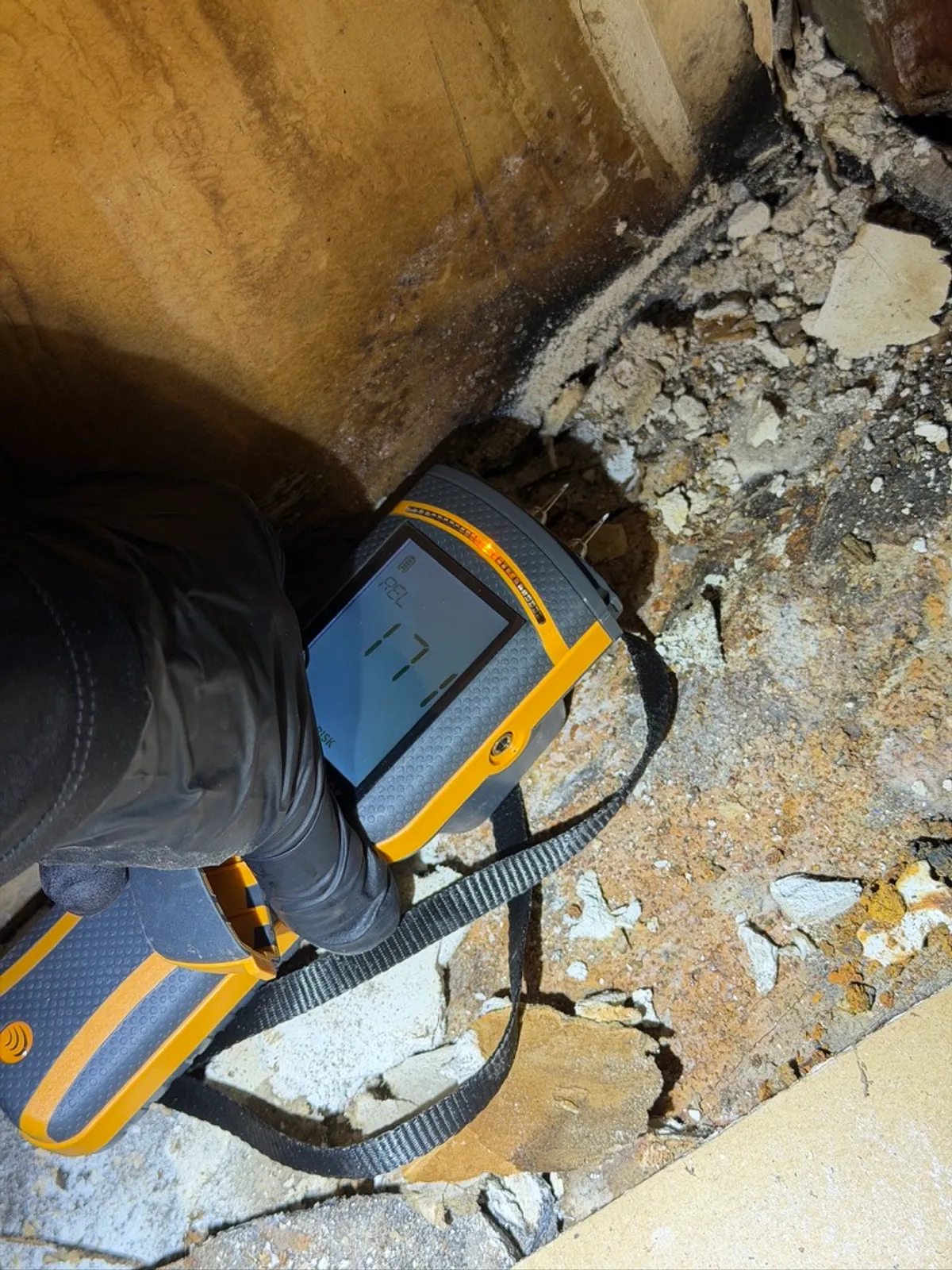
- Protimeter moisture meters to confirm whether suspect materials are genuinely wet.
- Buck BioAire air sampling onto Air-O-Cell cassettes to capture airborne spores from multiple rooms plus an outdoor control.
- Surface sampling of any visible suspect growth.
- Analysis by a certified third-party AIHA/NVLAP-accredited lab that identifies species and concentration.
Because we test and never remediate, there is no conflict of interest in your report — it reflects what's actually there, not an upsell. If you want a deeper look at the equipment and method, our indoor air quality testing service page covers it in detail.
What to Do If You Suspect Black Mold in Your Michigan Home
If someone in your household has unexplained respiratory symptoms, you've had recent water intrusion, or you simply smell something musty, the cheapest and clearest first move is to test. Spore Shield serves homeowners across Oakland County, including West Bloomfield, Bloomfield Hills, and Troy, with certified, lab-backed results in 72 hours.
Waiting rarely makes a mold problem cheaper to solve — our breakdown of the true cost of ignoring mold shows how quickly the numbers climb. And if you're not sure whether what you're seeing is even mold yet, the guide on early signs of mold in your home covers the warning signs worth acting on — and if the trouble spot is a wall, our guide to mold on drywall shows exactly what water-damaged and hidden growth look like.
How to Prevent Black Mold in Michigan Homes
Black mold needs sustained moisture to grow, so prevention comes down to controlling humidity and fixing leaks fast. The EPA recommends keeping indoor relative humidity below 50%, which is hard to maintain through Michigan's humid summers and tightly sealed winters without some help.
- Repair roof, plumbing, and foundation leaks within 24–48 hours — the window before spores germinate on damp materials.
- Run a dehumidifier in basements and crawl spaces to keep relative humidity under 50%.
- Vent bathrooms, kitchens, and laundry areas to the outside, never into the attic.
- Improve grading and drainage so runoff moves away from the foundation.
- Have your HVAC system checked if condensation or musty odors appear at the vents.
Prevention only works when you know where moisture is hiding. If you've already had water intrusion or lingering musty odors, a certified indoor air quality test confirms whether spore counts are elevated before growth spreads through the home.
Frequently Asked Questions
Straight, evidence-based answers to the questions Michigan homeowners ask most about black mold and health.
Is black mold actually dangerous?
What are the symptoms of black mold exposure?
Can you tell if mold is toxic just by looking at it?
How do you test for black mold in a home?
Who is most at risk from mold exposure?
Does black mold need to be professionally removed?
Test Your Home
Today!
Trusted by Michigan families, Spore Shield delivers fast, accurate mold testing. Pick a time online in minutes.
Book Your Inspection