

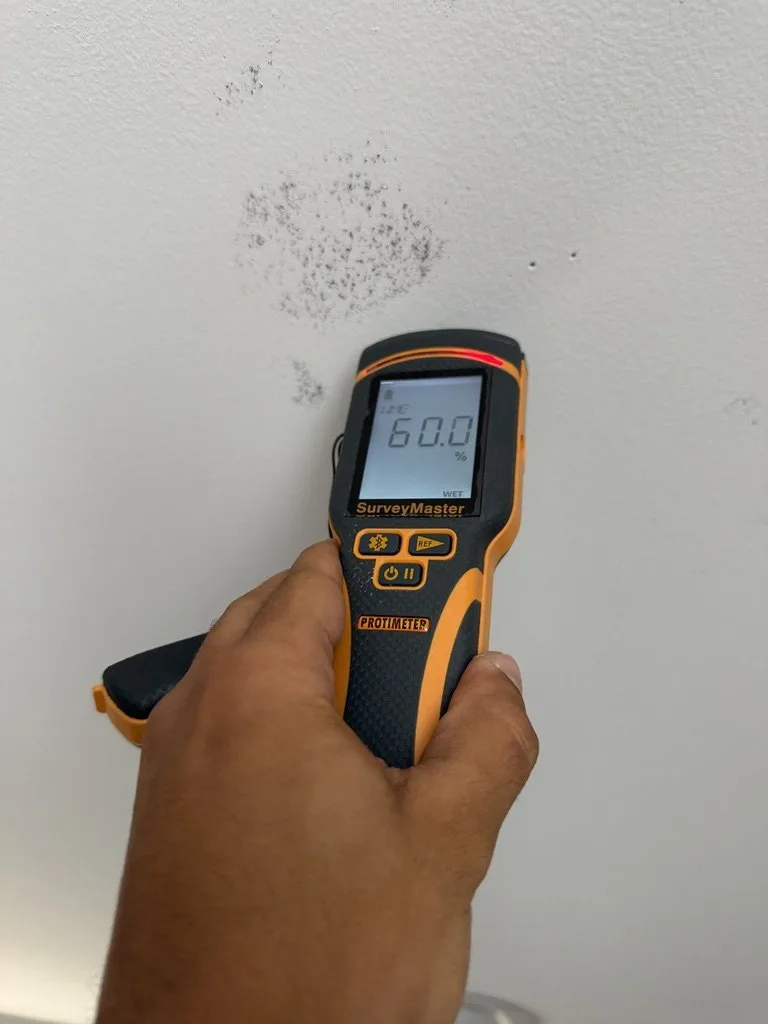
Short answer: regular drywall doesn't belong behind a shower. It's paper over gypsum, and both hold water. Tile and grout aren't waterproof on their own, so water reaches the wall every time the shower runs. If there's drywall back there and nothing to stop that water, the wall can stay damp for years without showing much on the surface, and damp drywall paper is one of the easiest materials for mold to grow on.
This guide covers why it happens, how to tell if your shower has a problem, and what to do before you regrout, re-caulk, or start a remodel.
Why drywall and showers don't mix
Standard drywall is a gypsum core wrapped in paper. The paper is cellulose, and cellulose that stays wet is food for mold. The EPA notes that mold can start growing on damp materials within 24 to 48 hours. A shower wall that gets wet daily never gets the chance to dry out completely.
The problem is that tile looks waterproof and isn't. Grout is porous. Caulk at the tub line and the corners shrinks and cracks over time. Every shower pushes a little water past them. In a shower built the right way, that water hits a waterproof membrane or a backer board that tolerates it. Behind tile set directly on drywall, it soaks into the paper and the gypsum.
If you want the deeper background on how wet drywall turns into mold, our guide to mold and drywall walks through it stage by stage.
Think your shower wall is wet?
Book an inspection and find out what's behind the tile before you regrout or remodel.
Regular drywall, greenboard, and cement board
Not every board you see in a bathroom is the same. Here's how the common ones compare for the wet part of a shower or tub surround.
The International Residential Code, which Michigan's residential code is based on, lists cement, fiber-cement, and glass-mat gypsum backers for tile in tub and shower areas. It also says water-resistant gypsum board (greenboard) shouldn't be used where it's directly exposed to water. Greenboard is fine on the rest of the bathroom walls. It just doesn't belong inside the shower.
Where it shows up in real homes
Drywall ends up behind showers in a few common ways:
- Older remodels. Before cement backer and waterproof membranes were common practice, tile over greenboard was a normal way to build a shower.
- Quick or DIY renovations. A bathroom redone fast, or to sell, can look brand new on the surface with ordinary board behind the tile.
- The edges of a shower. Even when the inside is cement board, regular drywall sometimes runs right up to the tub line or the edge of the surround, where splash and caulk failure reach it.
- Tub surrounds and shower kits. Panels glued over drywall can trap water that gets past a failed seam or caulk line.
Signs your shower wall is holding water
Mold behind tile usually stays hidden until the wall is opened. These are the clues that tend to show up first:
- Tiles that sound hollow when tapped, feel loose, or have started to pop off
- Grout that cracks or crumbles again soon after it's repaired
- A wall that feels soft or flexes when you press on it
- Caulk at the tub line that keeps separating or turning dark from underneath
- Bubbling or peeling paint on the other side of the wall, like a closet or hallway
- Swollen baseboard or trim next to the tub
- A stain on the ceiling below an upstairs bathroom
- A musty smell in the bathroom that cleaning doesn't get rid of
One sign alone doesn't prove there's mold in the wall. Several together, especially in an older or quickly remodeled bathroom, are a good reason to have it checked before you put money into new grout or a new shower.
Why Michigan bathrooms have it worse
Michigan winters keep houses closed up for months. Hot showers in a sealed house put a lot of moisture into the air, and bathrooms on exterior walls have cold wall surfaces where that moisture can condense. A weak or missing exhaust fan, or one that vents into the attic instead of outside, makes it worse. None of that causes the drywall problem on its own, but it gives a wet wall even less chance to dry.
How we check behind the tile without tearing it out
The goal is to find out whether the wall is wet, where, and how far it goes before anyone starts demolition. A typical shower check includes:
- Moisture readings around the tub line, corners, valve wall, and niches, compared with dry walls in the same room. Here's how moisture meters fit into a mold inspection.
- Thermal imaging to look for the cool patterns that wet materials often show. It finds moisture, not mold, as covered in can thermal imaging detect mold.
- The back side of the wall. The closet, hallway, or room behind the shower and the ceiling below are often easier to read than the tile itself.
- Lab sampling when it adds something. Air samples compared with a same-day outdoor sample, or a surface sample of any visible growth. Our guide to air vs. surface samples explains which one answers which question.
Spore Shield only tests. We don't do remediation or bathroom remodels, so there's no reason for us to find a bigger problem than you have. A dry wall is a normal result, and the report will say so.
What to do next
- Don't just seal over it. New grout or caulk over a wet wall can trap the moisture in. Find out what's behind the tile first.
- Don't scrape or tear into suspected growth yourself. Opening a moldy wall without containment can spread spores to the rest of the house.
- Get the wall checked before a remodel. Knowing where the moisture is helps you and your contractor scope the job.
- Rebuild with the right materials. Ask your contractor what backer and waterproofing they plan to use inside the shower.
- Confirm the result. If mold is removed, post-remediation clearance testing verifies the work before the new wall is closed up.
Frequently Asked Questions
Can you use regular drywall in a shower?
Is greenboard OK behind a shower?
Isn't the tile waterproof?
How can I tell if there's mold behind my shower wall without tearing it out?
Will regrouting or re-caulking fix it?
Should I test before redoing my bathroom?
Worried about your shower wall?
Spore Shield provides independent mold inspection and testing across Wayne, Oakland, and Macomb counties. We find where the water is and tell you what it means. What you do about it is up to you.
Call (248) 955-2269 or book an inspection online.
Test Your Home
Today!
Trusted by Michigan families, Spore Shield delivers fast, accurate mold testing. Pick a time online in minutes.
Book Your Inspection